Is a Sony a7S IV Coming? Fat Chance
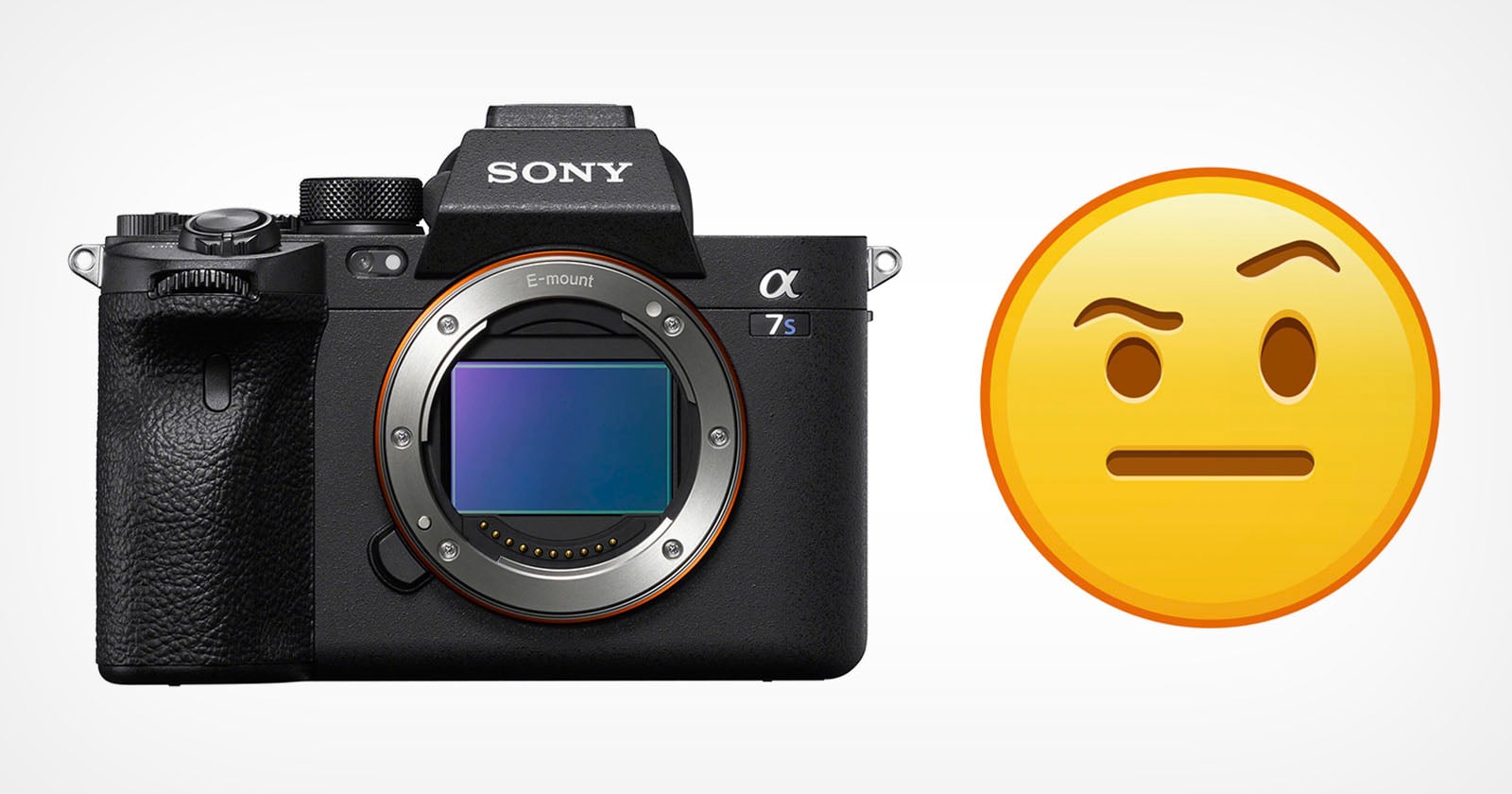
Ah, rumors, the unsubstantiated gift that keeps on giving. Rumors are often fun to think about, and sometimes they even come true. Color me skeptical that the current hot goss in the Sony world, the a7S IV, will become a reality, though.
As Sony Alpha Rumors writes, “Sony registered the new a7S IV in China!”
What actually happened is that Sony Japan registered a new, undisclosed camera in China with Wi-Fi 6 support, and Sony Japan typically registers “mid- to high-end models.”
“My bet is that this will be the new Sony a7S IV,” Sony Alpha Rumors writes.
“Bet” and “registered the new a7S IV” are very different things. We aren’t convinced it’s a safe bet, either.
That aside, we’ve discussed a hypothetical Sony a7S IV numerous times over the years, including in 2024. There have been plenty of opportunities to do so, as it’s been nearly six years since the 12-megapixel a7S III hit the market. But just because a camera hasn’t been refreshed in a while doesn’t necessarily mean that a successor is any more likely now. Sony could stop making a7S cameras altogether. The a7S IV has much less of a place in Sony’s ecosystem than the a7S III did in 2020.
“The important thing to remember is the a7S III — an excellent video camera — came out before the FX3 was released,” says PetaPixel‘s Jordan Drake. “And the FX3, we all know, [is an] incredibly popular, good looking camera.”
The a7S III and the FX3 share many similarities, including the imaging pipeline, but a wide range of customers rushed to buy FX3 units while the a7S III flew largely under the radar.
That is not to say that Drake doesn’t like the a7S III (he does) or that he doesn’t want an a7S IV (also yes), but it is hard not to look at the FX3’s success and popularity and think, “Wouldn’t an FX3 II make more sense than an a7S IV?”
Of course it would. Arguably, given how the FX3 performed in the market, it’s also safe to say that an FX3 II would make the proposition of an a7S IV existing at all even more tenuous. There is a lot of overlap there, and it’s not really Sony’s modus operandi to solve the same problems multiple times in nearly the same way.
It’s also important to consider that the a7S III was meant to be a very good low-light photo camera. It was really good at that, but with just 12 megapixels, its utility has proven highly limited for stills applications. Its low-light performance isn’t better than what you get when you downscale a higher-res Sony RAW file to 12-megapixel resolution. The a7 V, a7R VI, and a1 II don’t exactly want for high ISO image quality, either, especially when downscaled.
Today’s online discourse about an a7S IV centers on the new 16-megapixel image sensor in the delayed FX5. It’s a great sensor for video, and it will undoubtedly feature in future video-centric Sony cameras.
“I just don’t think there’s room for a photo-first 16-megapixel, fast-scanning sensor when Sony has an a7 V with a very fast-scanning partially stacked sensor already out there,” Drake says, discounting the sensor’s appeal in an a7S IV-style camera.
The Sony FX5’s sensor makes more sense in an expected FX3 or FX6 successor than it does in an a7S IV. An FX6 II with the FX5’s 16-megapixel sensor, the same great electronic ND filter, and professional expansion options is an obvious product to launch soon. An FX3 II with the same sensor and the original FX3’s compact form factor makes just as much sense.
But perhaps we are wrong. It’s happened before and will happen again.
So what if Sony does launch the a7S IV after all these years? After all, the company has shown a willingness to dig a series out of the annals of time before.
Drake would love to see it. As much as he likes the Sony FX5, he prefers the EVF and overall design of a camera like the a7S series for video work.
“I would rather have an a7-style body. I could do XLR on the hot shoe. But we keep being told this over and over, videographers hate electronic viewfinders,” he says.
The a7S III was “always my kind of thing, but clearly the industry disagreed.”
He can’t see Sony making the a7S IV, and neither can I. Maybe — hopefully — we’re wrong.
Image creditsSony. Header created using a graphic licensed licensed via Depositphotos.com.