Google's Redesigned Pixel 11 Phones Features Major Camera Upgrades
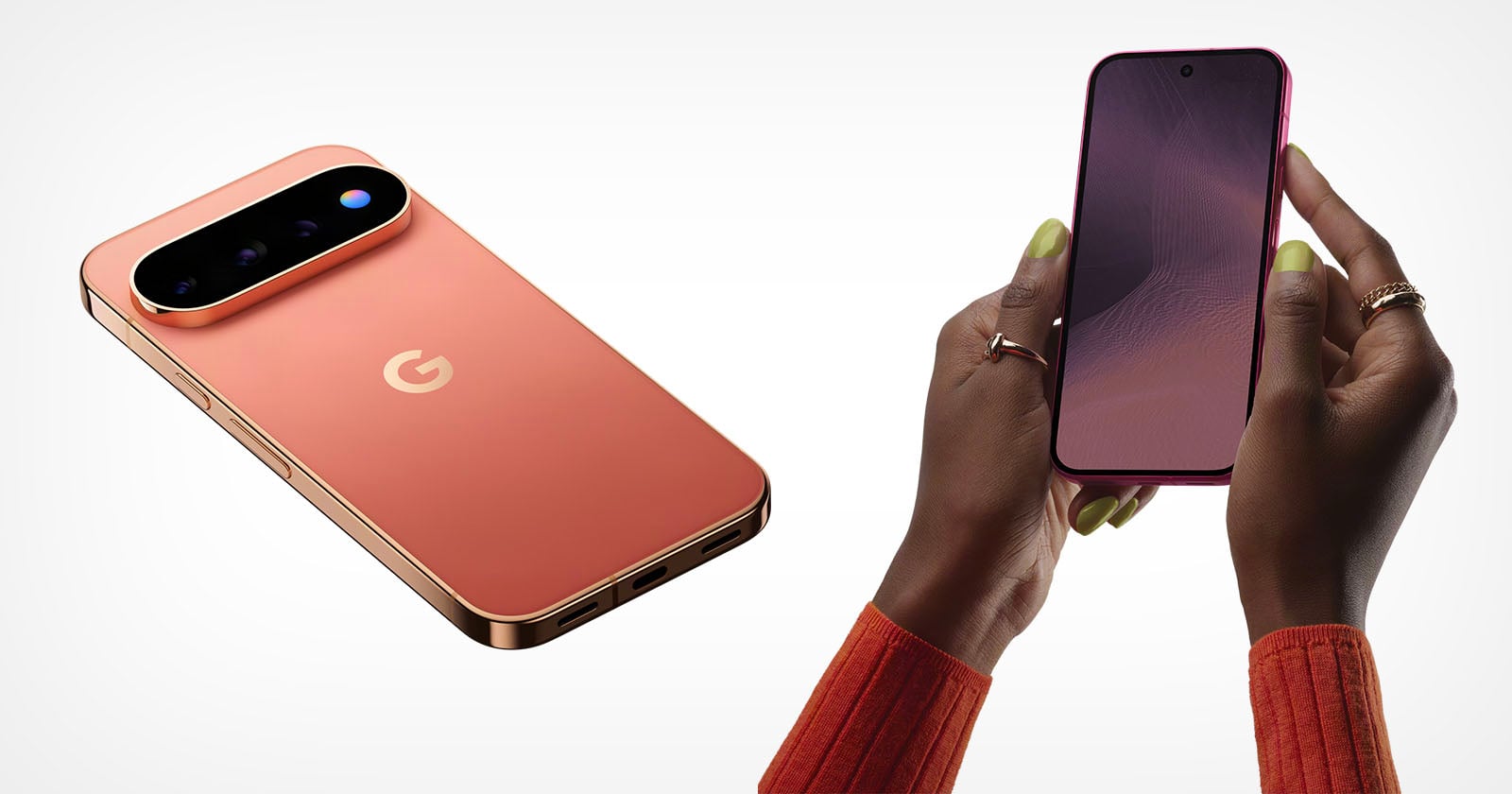
Google has unveiled its 11th-generation Pixel phones: the Pixel 11, Pixel 11 Pro, and Pixel 11 Pro XL. All three phones promise significant camera upgrades and the latest Google Gemini features.
All three Pixel 11 series phones have been redesigned, featuring what Google describes as a more “sophisticated” design. The Pixel 11 smartphones have edge-to-edge glass across the iconic Pixel camera bar.
With the Pixel 11 specifically, Google reduced the camera bar’s thickness by 40 percent, rendering the phone nearly “bumpless” when paired with a Made by Google case.
“That means it’s more pocketable than ever and completely wobble-free on flat surfaces,” Google promises of the Pixel 11.
All three Pixel 11 slab smartphones promise 30-plus hours of battery life, wireless charging, at least 12GB of RAM, storage starting at 256GB, Google’s newest Tensor G6 chip, and more.
On the Pixel 11 Pro and Pro XL side of things, the devices feature Pixel’s brightest Super Actua display, which offers up to 3,600 nits of peak brightness.
In the case of the Pixel 11, the screen is 6.3 inches diagonally with 495 PPI resolution. The bigger Pixel 11 Pro XL sports a 6.8-inch panel with ever-so-slightly lower 486 PPI resolution. In both cases, the panel has a 1-120Hz variable refresh rate and a Corning Gorilla Glass Victus 2 cover, which Google says is twice as scratch-resistant as before.
The Pro series Pixel 11 models also include what Google calls “HiLight,” a rear status display technology. HiLight uses colored LEDs around the camera’s flash to alert users of notifications. For example, when using Gemini, HiLight will glow differently depending on what it is doing, whether listening, “thinking,” or responding. Users can assign specific colors to custom contacts so it’s easy to know who is calling without actually picking up the device. Google says more capabilities will be added to HiLight after launch, including colorful alerts for message notifications from favorite contacts.
All three Pixel 11 phones include significant camera upgrades. Before diving into those, though, it is worth briefly covering the imaging features available across all three devices.
They all include Magic Capture, a brand-new mode that analyzes the situation to automatically capture good photos from a special video recording mode. They also include Camera Looks, which are like “film styles,” Google’s Camera Coach that uses AI to help photographers nail the shot, Portrait Mode, Panorama, and more. They also include Google’s latest AI-powered photo editing tools, including conversational image editing and Magic Eraser.
On the base Pixel 11, there’s a new larger 48-megapixel main camera that has 56 percent more light sensitivity than the Pixel 10’s main camera. Google doesn’t say specifically which image sensor it is using for the Pixel 11’s main camera, but it does note that it is a 48-megapixel Quad PD wide camera with a Type 1/1.56 image sensor and f/1.7 aperture.
This is flanked by ultrawide and telephoto cameras. The ultrawide module is a 13-megapixel Type 1/3.1 camera with a 120-degree field of view. The telephoto camera is a 10.8-megapixel Dual PD system with an f/3.2 aperture, 23-degree field of view, 5x zoom, and Type 1/3.2 sensor. Thanks to the Tensor G6 chip, the 5x telephoto lens also now offers 30x Super Zoom.
The Pixel 11 can record 4K video at up to 60p, including 10-bit HDR. It also does slow-motion video at up to 240 frames per second.
The Pixel 11 Pro and Pixel 11 Pro XL feature a brand-new main camera, which, as expected, Google says is its best camera yet.
The “Pro triple rear camera system” is headlined by the 50-megapixel Octa PD wide camera. It has a Type 1/1.3 image sensor paired with a fast f/1.68 lens.
The telephoto camera has been completely redesigned, promising a larger image sensor with 30 percent more light sensitivity. It features a 48-megapixel Quad PD telephoto camera with an optically stabilized f/2.8 5x zoom lens. The sensor is quite large for a telephoto camera at Type 1/1.95. Notably, Google has added Portrait Mode to its telephoto camera, giving photographers more options. There’s also 120x Pro Zoom.
Rounding out the rear triple camera system is the 48-megapixel Quad PD Type 1/2.51 sensor. The ultrawide lens has an f/1.7 aperture and 123-degree field of view.
Across all three rear cameras, the Tensor G6 chip promises improved low-light performance and better image signal processing. Thanks to the new image sensors and better software, Pixel’s Night Sight mode is back and better than ever. Night Sight is now up to four and a half times faster than before.
On the video side of things, the Pixel 11 Pro series models record 8Kp30 video alongside the expected 4Kp60. It has 10-bit HDR and slow-motion recording at 240p.
The Google Pixel 11, Pixel 11 Pro, and Pixel 11 Pro XL are available to order today starting at $899, $1,099, and $1,299 with 256GB of storage. The Pixel 11 also comes in a 512GB version, while the Pixel 11 Pro and 11 Pro XL have 512GB and 1TB options, the latter of which include 16GB of RAM instead of the standard 12GB.
The Pixel 11 comes in Frost, Pistachio, Hibiscus, and Obsidian colorways, while the Pixel 11 Pro models ship with new Canyon, Olive, Fog, and Obsidian (matte) options.
All the new Google Pixel 11 phones will be available on August 20.
Image creditsGoogle