Sony Is (Probably) Never Making a Medium Format Camera
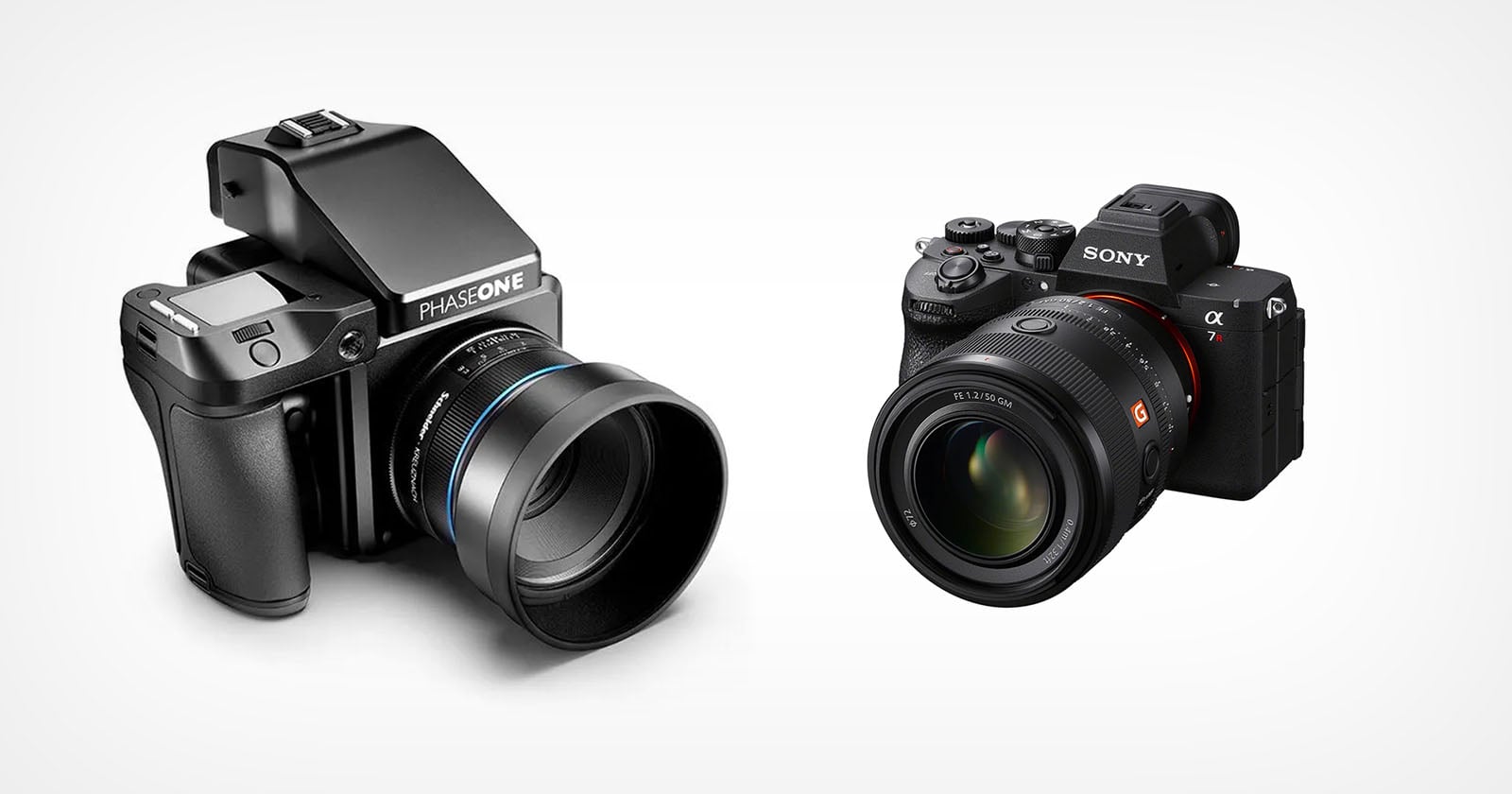
There has been chatter about Sony making its own medium format camera system for about as long as Sony has made image sensors for other brands’ medium format cameras. Sony’s recent reveal of the 65mm-format Rialto 65 image sensor block for Venice 2 cinema cameras has only strengthened these rumors. However, the speculation is pipe dreaming, at best.
In fairness, Sony Alpha Rumors, which spurred the latest wave of Sony medium format system hype, described its claims as a “wild rumor.”
“Last week Sony announced the development of the new Rialto 65 medium format Cine camera,” Sony Alpha Rumors wrote. “I figured it’s a good time to share some of the wild medium format rumors I got in the past months.”
Among these rumors, all of which come from new or anonymous tipsters rather than reliable leakers, there are claims that Sony may develop an entirely new medium format camera line with a new lens mount and “ultra-high MP sensor.”
This same tipster says that Sony chose a 54 x 36-millimeter sensor size for the Rialto 65 because it preserves the 3:2 aspect ratio of the Sony Alpha system. A full-frame Sony FE lens, which covers a 36 x 24mm sensor, could be easily used in a crop mode, similar to using an APS-C lens on a full-frame Sony Alpha camera.
While that is interesting, 3:2 is also a good aspect ratio for a cinema camera system that uses open gate recording and supports anamorphic lenses. It’s not that weird. There are plenty of cinema cameras with this same aspect ratio, such as the venerable Arri Alexa 35. There does not need to be a secondary, secret reason for the 3:2 image sensor.
That said, this new Sony “medium format” image sensor, which qualifies as large format in the cinema space, has a different aspect ratio than other similarly humongous image sensors Sony makes, such as the 5:4 150-megapixel 53.4 x 40mm sensor for the Phase One IQ4 platform. Then there are the 4:3 43.8 x 32.9mm image sensors Sony makes for the Fujifilm GFX and Hasselblad X2D systems.
That’s an important point to consider, actually. Sony has been making 50- and 100-megapixel medium-format sensors for relatively mainstream medium format mirrorless cameras for a decade. While both the Fujifilm GFX and Hasselblad systems have carved out respectable niches during that period, it’s not exactly like the market is booming. The cameras and lenses are relatively expensive, relatively slow, and not nearly as versatile or flexible as full-frame cameras. They are specialty tools with limited market appeal, even at their relatively aggressive prices and strong features set.
A supposed Sony medium-format camera with a much larger 54 x 36mm image sensor would be much more expensive, use much bigger and pricier lenses, and, all else equal, be significantly less flexible than the GFX and X2D cameras available today.
While Sony could maybe undercut someone like Phase One, it wouldn’t be by a huge margin. Those Phase One cameras are typically $50,000 plus, and the glass ain’t cheap either.
Over at The Phoblographer, a new story published today says, “I’m 90% sure Sony will launch a medium format camera for photography.”
I’m at least that sure Sony won’t, and probably much closer to 100%, because what is there for Sony to gain?
Sony is arguably more risk-averse than nearly every other camera maker. That’s not an insult, by the way, it’s just an observation. Sony is a conservative company, and launching an all-new, extremely expensive camera system with very limited growth prospects does not fit that playbook in the slightest.
Sony can afford to mess around in the large-format cinema camera space because there’s still room in that market for something like the Rialto 65, it doesn’t require Sony to develop an all-new lens system, and, perhaps most importantly, it doesn’t encroach upon anything else Sony is doing.
A post shared by Hugh Hou (@hugh.hou)
On the other hand, a medium-format camera would require an entirely new lens system and, frankly, undercut Sony’s marketing of its high-resolution full-frame cameras. Sony markets cameras like the a7R VI and a1 II on the basis that they deliver exceptional image quality that exceeds professional standards.
It’d be a little tougher to sell these cameras with another Sony system lurking around the corner with even better image quality. Likewise, it’s tough to sell what would likely be a $40,000-plus system on an image quality basis when the $4,500 a7R VI exists and is 95% of the way there, with way more speed, way more lenses, and much better overall performance. I appreciate that a big medium format image sensor would deliver better image quality, but how much better and how much it even matters is a matter of significant debate.
Recent advancements in image sensor technology, such as Dual Gain Output (DGO), have only strengthened Sony’s full-frame image quality claims. Not for nothing, the 67-megapixel Sony a7R VI delivers dynamic range performance nearly as good as the 100-megapixel Fujifilm GFX.
This also relates to why I think a 44 x 33mm Sony medium format system, akin to the Fujifilm GFX and Hasselblad X2D II 100C, makes even less sense for Sony than a larger, full-size medium format camera. It would significantly encroach upon Sony’s existing full-frame product lineup and still require an all-new lens mount and lens system, as E-mount lenses cannot cover a 44 x 33mm sensor. The margins are smaller, the initial cost and risks are about the same, and the market is crowded.
Sony would need to invest serious money, research and development, and engineering efforts to create an entirely new photographic camera system, and all those resources come from somewhere. They don’t appear magically or without real and opportunity costs. Sony is in a serious fight in the full-frame camera space right now with Canon, and frankly, keeping market share is not going to get any easier. That market is so, so much bigger than a medium format one could ever be, and Sony has much more to gain there. Just as importantly, it has a lot more to lose there, too.
Could Sony make a medium-format camera system? Of course it could. It could have done so at any point in the past decade-plus.
Sony has the sensor technology, the optical expertise, extensive experience designing and launching all-new camera systems, and plenty of money. But these are all precious resources, and it is very difficult for me to imagine Sony, being the company it is, opting to throw its weight behind an inherently risky endeavor with so little payoff.