Addressing 'Creative Loneliness'
As much as I think that landscape photography is a lone pursuit, it often conflicts with the need for feedback about our work. Learning to take photos is one thing but learning to interact with others, to find connections and build a creative network is often overlooked, but just as vital.
I’ve long believed that photography is, at its core, a private endeavour. We make pictures primarily for ourselves driven by a need to create, to enjoy the act of seeing, and to add meaning and richness to our lives. That, I think, is the real reason most of us pick up a camera.
Still, I’d be dishonest if I claimed that no one needs an audience. For reasons I can’t fully explain, every creative person feels a pull to show their work to others. From that impulse comes the idea that we need an audience.
I’ve always been uneasy with that idea. An audience rarely delivers what we hope it will. We may expect validation, understanding, or a sense of being seen, whereas all an audience guarantees is exposure – more people knowing about your work and forming their own opinions of it. What those opinions are, and how people respond, is entirely out of your control.
And so I often return to the question of need. After more than two decades of image-making, I’ve come to believe that what nourishes us creatively isn’t an audience at all, but a community.
The difference between the two is important. You have little influence over an audience. You have very little choice in who your audience is, and communication is largely one-way – more akin to a broadcast service. You put your work out into the world and your audience consumes it. That’s about as far as it goes. A community, by contrast, is built through relationships. It’s a space in which conversation flows both ways, where you choose who you spend time with, why you engage, and how deeply you connect.
In theory, social platforms like Instagram should help with this. In practice, they don’t. Social media operates less like a gathering place and more like a brokerage. You don’t see everything from the people you follow, and those who follow you don’t see everything you share. What appears – and to whom – is decided by algorithms over which you have no say, unless you’re willing to pay.
That kind of mediated “socialising” rarely leads to meaningful connection. It encourages visibility, not conversation.
If you want a real community, you’re unlikely to find it ready-made on a social network. You have to build it yourself, slowly and deliberately, from the people you meet along the way. And you must be selective. Choose those who challenge you, who offer different perspectives, and who bring something unexpected into the conversation. They don’t need to be good or better photographers than you; they simply need to be thoughtful, engaged, and open.
Years ago, a friend of mine who is a classically trained musician told me she rarely found inspiration in her students. Although there is often some truth in this, my own experience has been different. Some of the most insightful observations I’ve encountered have come from workshop participants at all levels of ability and at very different stages of their creative lives. What matters isn’t so much someone’s technical skill, but whether they can offer insights you hadn’t considered.
That’s what I look for in a community. I’m not seeking validation – it teaches me nothing, and I tire of it quickly. I’m drawn instead to people who ask good questions, who see things differently, and who remain curious about the world.
Building this kind of community requires intuition as much as effort. It means learning who to connect with, who energises you, and who helps you see your work more clearly. Being a creative isn’t just about making the work; it’s about learning how to relate, how to listen, and how to recognise meaningful connections when they appear.
Your community doesn’t have to consist solely of photographers. Some of my best insights have come from musician friends and others working in different disciplines. What we share isn’t a medium, but a way of thinking.
I’ve often found that surrounding myself with others running complementary businesses – symbiotic relationships – has been beneficial. Small business owners tend to be independent, willing to take risks, and open to opportunity. For me, it’s about being around people who are geared more towards making things happen than waiting for them to happen.
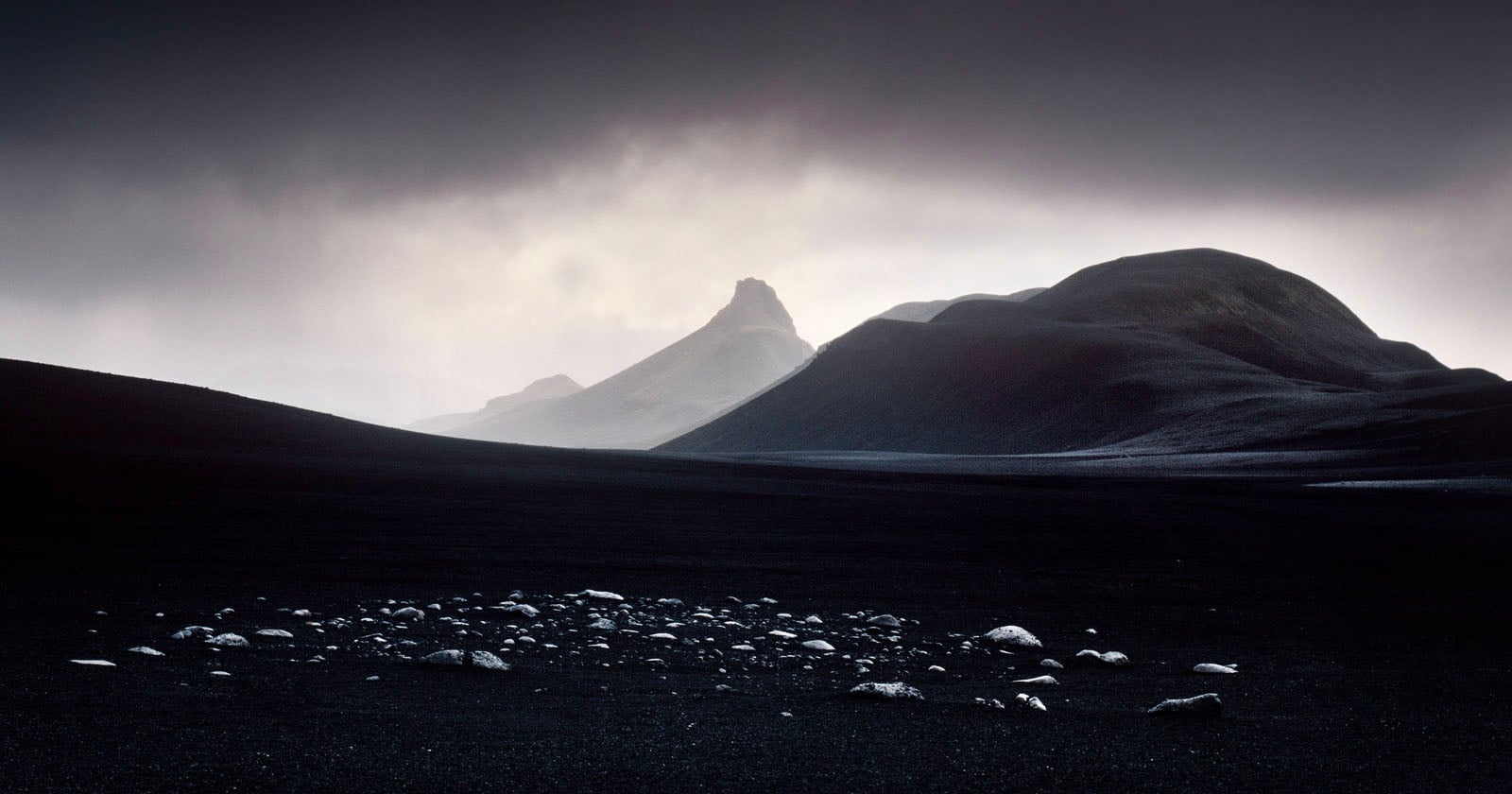
Perhaps my biggest creative break came from inviting an Icelander, who had bought my book, to lunch. Hoping to make connections in the country, I had no idea that this meeting would lead me to work in parts of Iceland I had never previously considered. Over the many years I have known him and his son, they have been instrumental in my photographic development because they both understand my sensibilities and what I’m looking for. The best time was when Haukur said, “There is a part of the country that is like a white canvas with black brush strokes on it.” He was referring to the interior of Iceland in the winter. I have been there many times by special 4×4 as there are no roads. It is a minimalist playground where I feel I have had great opportunity to explore the edges of perception.
Ansel Adams and Edward Weston exchanged prints and ideas. They were peers, engaged in an ongoing conversation. That kind of exchange still matters. Whether through workshops, clubs, chance encounters, or shared travel, we all need to find those who help drive us forward.
In the end, what sustains us creatively isn’t an audience watching from a distance, but stimulation from others. Social media cannot offer this level of depth or personalisation – its goals are simply different. Instead, we must cultivate and continually seek out those who energise us, who help us see our own work more clearly, and whose openness and curiosity lie at the heart of all creativity.
The article courtesy of ELEMENTS Magazine. The ELEMENTS is the monthly magazine dedicated to elegant landscape photography, insightful editorials and fluid, clean design. Inside you will find an exclusive and in-depth articles and imagery by the best landscape photographers in the world such as Charles Cramer, Christopher Burkett, Hans Strand, Rachael Talibart, Christian Fletcher, Charlie Waite, and Steven Friedman, to name a few. Use the PETAPIXEL10 code for a 10% discount off the annual subscription.
About the Author: Bruce Percy is Scottish landscape photographer who has been running workshops and tours around the world since 2007. Attracted to the more minimalistic landscapes he has been a regular visitor to Bolivia, Japan, Iceland, Brazil and Patagonia to name a few since as far back as 2003. Many of these places he cites as his home from home.