Man Distracted Helicopter Pilot by Flying Drone Near Wildfire
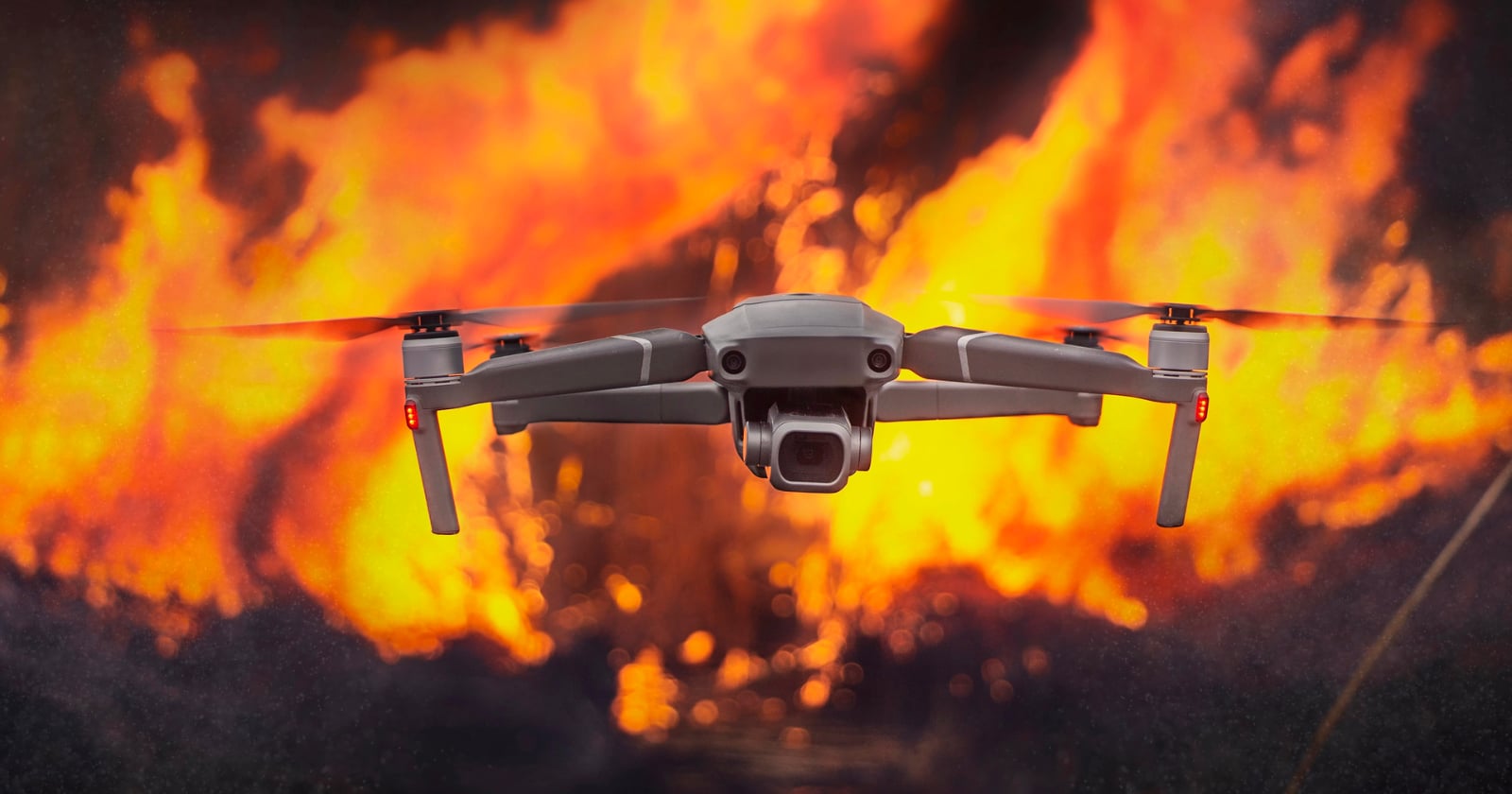
A realtor has been ordered to pay a $3,600 fine after flying a drone into an active wildfire zone in British Columbia, where it distracted a helicopter pilot battling the blaze.
Realtor Derek Leippi was found guilty of interfering with fire control after flying a drone over Okanagan Lake during the McDougall Creek wildfire in the Okanagan region of British Columbia, Canada, in August 2023. The wildfire burned more than 34,522 acres, forced at least 35,000 people to evacuate, and sparked two additional fires.
Leippi had faced penalties of up to $72,933 (Canadian $100,000) and/or up to one year in jail. He could also have been held responsible for firefighting and related costs, which may have reached into the millions. During the trial, however, Leippi says he had already suffered consequences, stating that media coverage of the incident had harmed his professional reputation as a realtor. He was ultimately fined $3,645 (Canadian $5,000).
The incident occurred on August 27, 2023, 10 days after the McDougall Creek wildfire destroyed more than 300 structures on the west side of Okanagan Lake. Leippi had taken his boat onto the water and launched a DJI drone to capture video footage of the Okanagan Lake Resort, which had been destroyed in the fire.
According to a report by Vancouver Sun, two Conservation Service Officers were patrolling Okanagan Lake to prevent public access to the shoreline when they saw Leippi in an area where helicopters were collecting water. He was asked to leave and complied. However, he continued to fly his drone at a low altitude, and the officers did not immediately notice.
As Leippi’s drone hovered above the lake, a helicopter was collecting water just feet away from Leippi’s boat. The helicopter Brett Mayden was working to extinguish part of the fire when he spotted the drone, which diverted his attention from firefighting.
According to the court case, reported by CBC, the pilot, who was left stressed by the drone, twice attempted to knock it out of the air by dropping water on it.
“For those moments when Mr. Mayden was annoyed by the drone, his focus was no longer on the firefighting efforts,” Judge Cathie Heinrichs wrote. “During the time he was attempting to eliminate the drone, he could have been halfway back to the fire he was helping to suppress.”
The pilot was unsuccessful and resumed firefighting, but his “unusual actions” alerted officers, who returned and saw Leippi land the drone on his boat. They then seized the drone, controller, and his cellphone.
During the trial last month, Leippi testified that he was unaware of any active fire suppression, saying he saw no smoke or flames near the resort at the time. But Judge Heinrichs rejected that argument, stating it was “common knowledge that the fire was extensive, vast numbers of people were evacuated and displaced, and many people lost their homes and businesses.” The judge also did not accept Leippi’s defense that he misunderstood the seriousness of the situation or that he had taken sufficient steps to avoid interfering with the helicopter. Heinrichs wrote that Leippi was flying the drone to record video of the destroyed resort.
“A reasonable person would put those pieces together and understand that neither his boat nor the drone should be in the area, lest they come in the way of the forest fire efforts,” Heinrichs writes.
Prosecutors had sought a $15,000 fine. While the judge found that Leippi’s actions distracted the pilot for a short time, she said mitigating factors were considered, including that it the was realtor’s first offense. She adds that the $5,000 penalty was sufficient to deter similar behavior in the future.
Last year, the civilian pilot who flew his drone into a firefighting aircraft operating above the Los Angeles wildfires was sentenced to two weeks in prison and ordered to pay $156,000 in fines.
Image credits: Header photo licensed via Depositphotos.