Remote Cameras Follow Wolf's Historic Journey into Los Angeles County
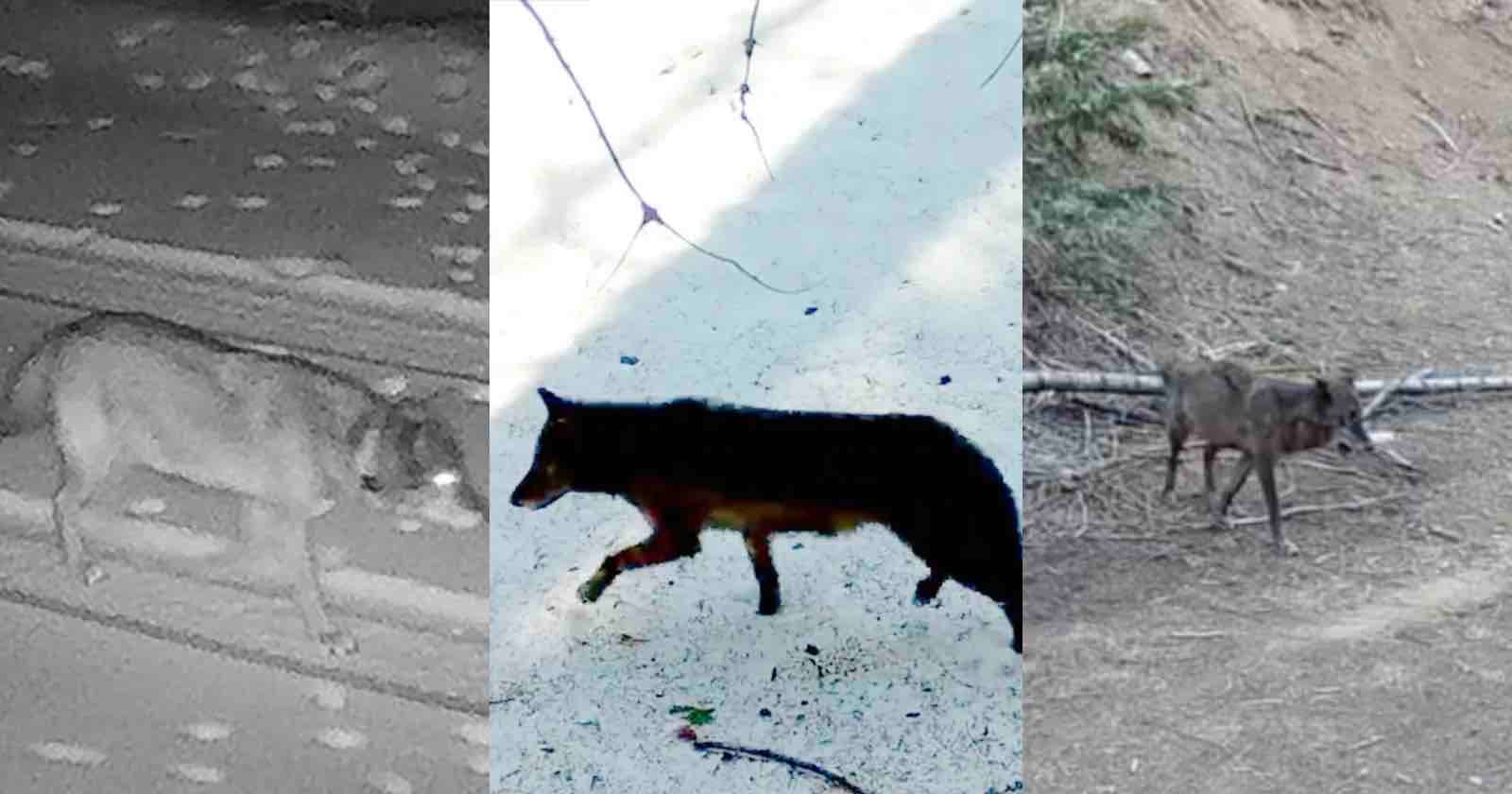
Remote cameras and tracking data are documenting a wolf’s historic journey into Los Angeles County, the first confirmed sighting of the species there in nearly a century.
Earlier this year, a three-year-old female gray wolf, named BEY03F, made headlines when she was detected in Los Angeles County, marking the first known presence of the species there in roughly 100 years. BEY03F was born in 2023 in Plumas County, about 400 miles from Los Angeles County, as part of the first litter of the Beyem Seyo pack. Officials with the California Department of Fish and Wildlife are not sure how she spent her first two years, but she was fitted with a GPS collar last May.
On January 13, 2026, a remote camera captured BEY03F in Tulare County. She then traveled hundreds of miles south, reaching Los Angeles County on February 7, when her collar signaled that she was north of Santa Clarita in the San Gabriel Mountains. By February 9, tracking data showed she had moved back north into Kern County, east of Lebec.
According to a report by The LA Times, the “history-making” wolf continued her landmark journey further, entering Inyo County around 7 a.m. on Sunday, about 20 miles south of Mt. Whitney. State wildlife officials say she is the first documented wolf to enter the Eastern Sierra County in more than a century.
Axel Hunnicutt, gray wolf coordinator for the California Department of Fish and Wildlife, tells the news outlet that by early Monday afternoon, BEY03F had moved deeper into the county, west of the community of Bartlett. The wolf crossed the Sierra Nevada in about three to four days.
Experts say the wolf is likely still searching for a mate, which may explain her movements. Breeding season runs from mid- to late winter, and wolves are fertile only once a year, around Valentine’s Day.
“Probably what we’re seeing is that she’s like, ‘Well, I didn’t breed this year, but I do still need to find a mate,’” Hunnicutt tells The LA Times. “So she will continue to travel.”
Hunnicutt said it is also possible, though “less likely,” that the wolf is pregnant while on the move, which could suggest unusual circumstances such as the loss of a mate. Wolves typically begin giving birth around mid-April and are largely monogamous.
Gray wolves once numbered between 250,000 and two million across the contiguous United States but were nearly eliminated by the mid-20th century due to trapping, habitat loss, and hunting. They were wiped out in California by the 1920s.
Populations have since rebounded in recent decades, supported by protections under the Endangered Species Act of 1973 and the reintroduction of wolves to Yellowstone National Park in the 1990s. Today, about 6,000 gray wolves live in the contiguous United States, including at least 70 in California, where there are nine confirmed packs.
Despite the recovery, gray wolves remain endangered in much of the contiguous United States, including California.
Image credits: All photos via California Department of Fish and Wildlife.