Apocalyptic Scenes in Australia as the Sky Turns Red
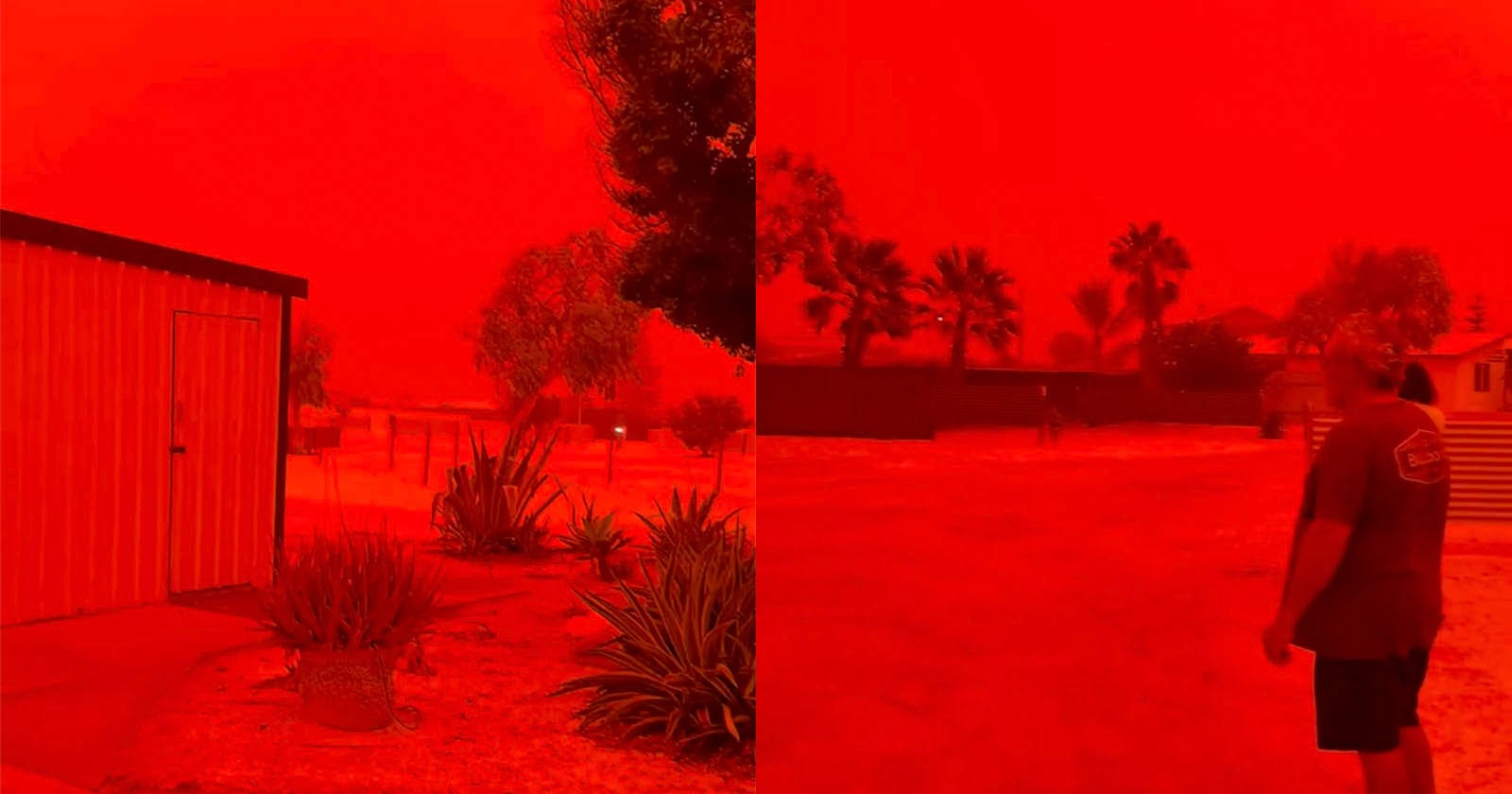
Photographers are always looking for the best light, but what about bright red? It happened this week in Western Australia.
The apocalyptic scenes were caused by Tropical Cyclone Narelle and affected an area named Shark Bay.
“Incredibly eerie outside and everything is covered in dust,” Shark Bay Caravan Park wrote on Facebook on Friday. “Not a lot of wind yet. Let’s hope we get enough rain to wash it all off. It’s an inside day for us that’s for sure.”
NO, that's not a filter! ☁️🔴 The sky turned an eerie shade of red in Western Australia as dust filled the air ahead of Tropical Cyclone Narelle. pic.twitter.com/dCQ2hjFluI
— AccuWeather (@accuweather) March 28, 2026
The Bureau of Meteorology’s Jessica Lingard tells The Guardian that a combination of the high winds from the cyclone mixed with the area’s rust-red, iron-rich soil created the red effect, which is reminiscent of the Mad Max movies.
“Narelle just whipped, picking up the dust from the landscape and pushing it through places like Shark Bay ahead of the cyclone,” Lingard says. “Strong winds, dry ground, and photographers in the right place to experience it all.”
According to the U.S. National Oceanic and Atmospheric Administration, the soil has undergone a weathering process of oxidation over the course of millions of years.
“In this type of environment, these rocks actually begin to rust,” the agency explains. “As the rust expands, it weakens the rock and helps break it apart.”
A thick layer of cloud in the area turbocharged the effect. There are often dust storms in that part of Australia, but it is usually under sunny skies; the direct sunlight softens the red dust particles hanging in the air. But on Friday, the dense clouds blocked out the light source.
“When you have got the thick cloud cover, the light doesn’t feel like it’s coming from a single source,” senior forecaster at the Bureau of Meteorology Angus Hines tells ABC. “It feels like the light is evenly illuminating the ground, like a panel of lighting as opposed to one bright spotlight.” He calls it “the most striking example of that phenomenon that I’ve ever seen”.
With all that dust hanging in the air, photographers might want to think about their IP (Ingress Protection) rating, which measures a camera’s resistance to dust.