Honor Put a Robotic Camera Gimbal in a Smartphone
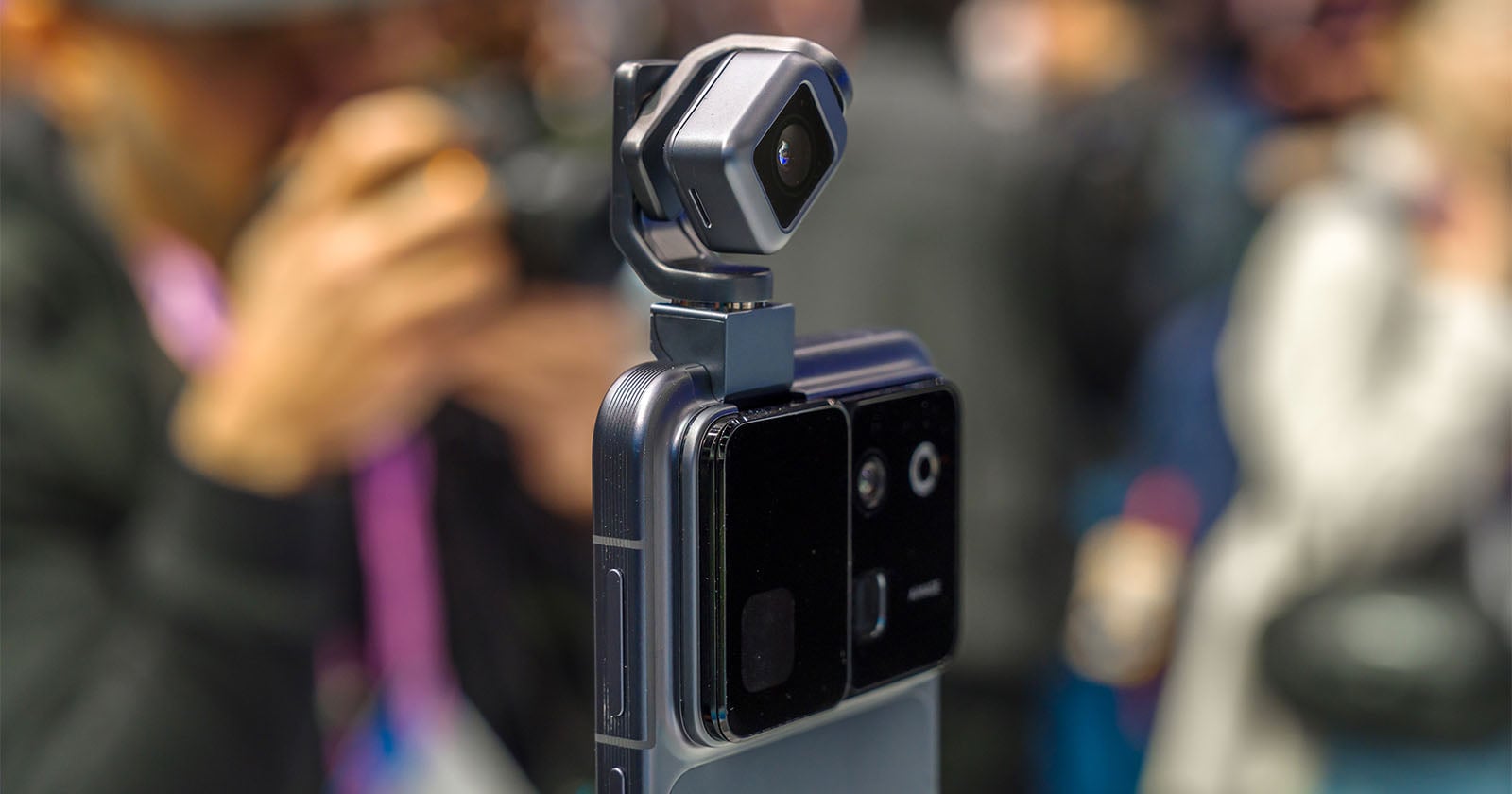
What happens when you put a small robot into a smartphone and let it control the camera? Honor’s Robot Phone is essentially built on that premise as an Android phone with a built-in gimbal. And the company says it will become a finished product coming to market at some point in 2026, starting in China first.
As with much of what Honor does in executing a mobile strategy these days, AI plays an active role in how this piece works. It’s even calling it a “new species of smartphone”. Being a gimbal with AI-driven capabilities, it also doesn’t rely entirely on touchscreen input to do its thing.
That can include subject tracking, responding to voice commands, and multimodal perception to identify sounds and maintain visual awareness. The idea is to give the camera a means to express and interact with users in real time.
Rather than an accessory you attach to the top, this robot camera emerges from an internal housing within the rear camera module. To do it, Honor created a micro motor small enough to do the job, but also sturdy and robust enough to be strong and stable. Looking at it up close, I fear inadvertently dropping it might cause damage and expensive repairs, but Honor reps insist it’s more resilient than it looks.
The housing itself is substantial because the camera twists to nestle inside, with a window sliding over to cover it. That leaves less room than usual for the other rear cameras, of which Honor isn’t talking about yet. From my own vantage point, I have a hard time seeing sizable sensors getting in there, let alone a periscope, though the module’s additional thickness might at least make bigger sensors possible.
Honor previously showed a non-working prototype at CES in Las Vegas, whereas the prototypes at Mobile World Congress in Barcelona are functioning, though purely for the robot camera. Apart from knowing it’s a 200-megapixel sensor inside, it’s not clear how big the sensor is or who makes it. Other general specs for the Robot Phone are also unknown.
The mechanical 4-DoF (degrees of freedom), three-axis gimbal has full pan rotation, so it can work facing forward or backward, making video calls pretty easy to manage, since the camera also tracks you as you move out of frame. This AI Object Tracking works both ways, meaning it can track you, the user, in a selfie, and subjects in front of you. It’s not entirely clear whether this applies only to human subjects or to moving objects as well. When action moves faster, Super Steady Video mode increases stability to keep the subject in view, such as at a sporting event or concert.
As for the rotations involved, AI SpinShot can perform 90-degree and 180-degree movements for stabilized, smooth footage and transitions, even when shooting one-handed.
Inside its booth, Honor also showcased comparisons and deeper dives into how the stabilization works. The most obvious discrepancy lay in the Robot Phone next to an iPhone, both mounted on a rig that constantly moved and rotated, with live views showing the massive difference in footage. The Robot Phone looked like it barely moved, if at all, whereas the iPhone was a shaky mess.
An Honor staffer walked on a treadmill while recording video with jittery results, while another did it with a Robot Phone, where the footage looked like she was standing still. In a hands-on space, two dancers at different times performed routines with the gimbal and camera following them the whole time. Interestingly, it also tilted at times to create a cinematic touch in following movement, similar to how a camera operator might.
In another space, attendees could try out the voice commands to focus and respond. In one case, it commented on a man’s suit; in another, it noted that a crowd was forming on the other side. On top of that, the camera can nod or shake its head, and even dance to music, giving it a little personality to go with the feedback.
As neat as it looked, I could also tell it needs work before Honor gets to a final result. While timelapse photos and video seem like obvious use cases for this to me, Honor didn’t mention them. And with such a heavy focus on video, there are scant details on how the camera will perform with still photos. Will burst or interval shooting work differently with a camera like this? How about portraits? We just don’t know yet.
The Robot Phone is also part of a collaboration and partnership Honor is building with Arri, the renowned cinema company. The latter’s pivot to more consumer-facing opportunities aligns with Honor’s desire to stand out in a highly competitive smartphone market, especially in cutthroat China.
What’s clear enough is that Arri will have a bigger role to play by the time this device launches. Its color science and image processing appear to be likely contributors to the results, though both brands are mum on any details.
All of this — the Robot Phone and Arri collaboration — is part of Honor’s “Alpha Plan” unveiled in 2025, which involves a $10 billion investment over five years to transition from making smartphones to an AI ecosystem. More collaborations and wacky concepts could be on the horizon in realizing that AI vision.