Light and Photography: How Light Interacts With Your Subject
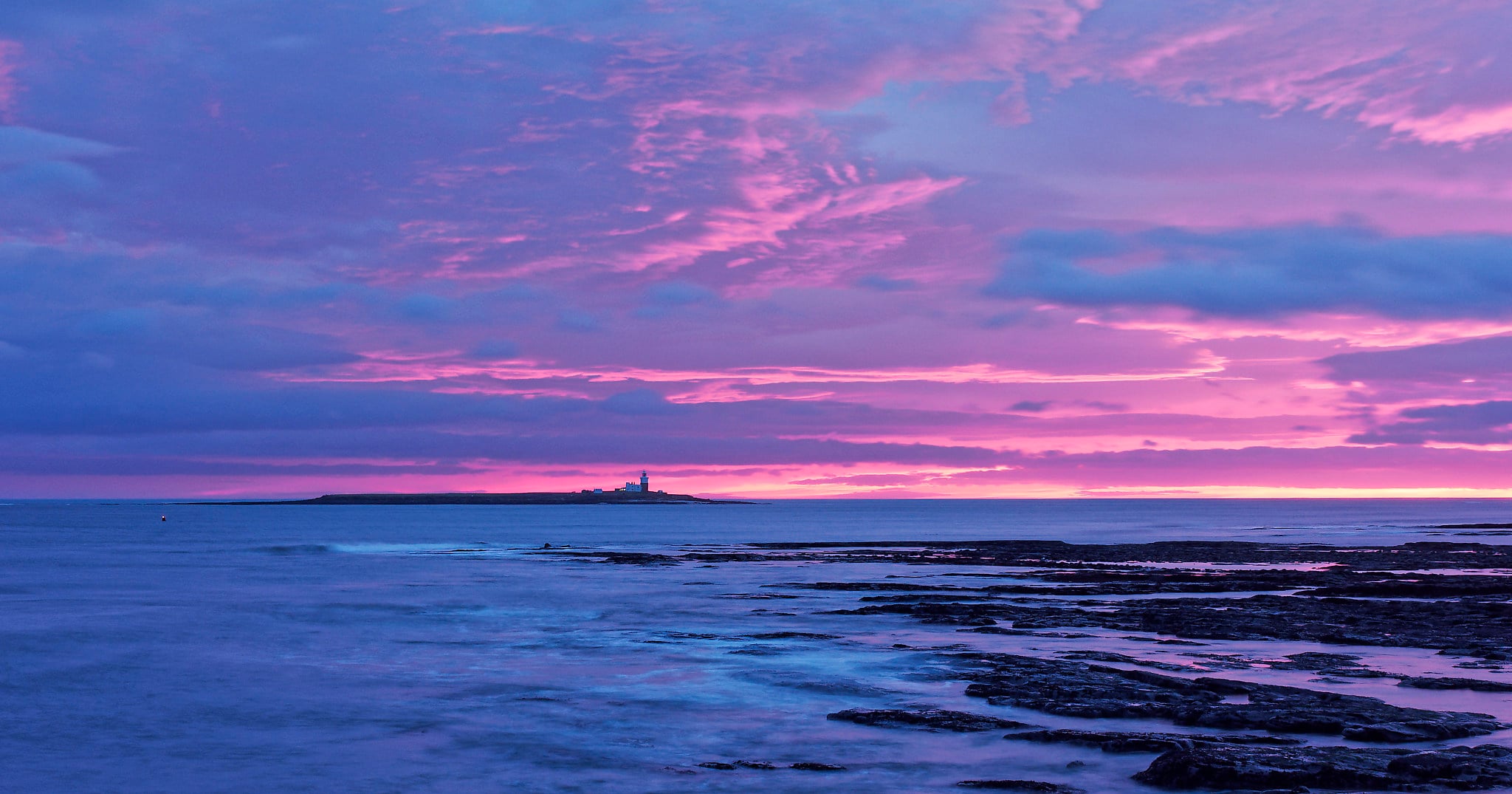
The secret to a good photograph lies in your eye for composition and in how you see light interacting with both the world and your camera. In this, the first of a series of articles on light, we look at how its interactions with subjects can affect the feel of our photos.
All art relies primarily on one branch of science. For music, it is acoustics; it works with sound waves. Sculpture needs a basic understanding of gravitational physics. Meanwhile, painting requires knowing elements of both chemistry and light.
Identifying those sciences helps artists gain a better grasp of their creative work. Of course, all the arts are influenced by other physical factors as well. The painter may consider gravity when balancing a composition and, like the sculptor, needs light as well. A musician may consider the quality of light when composing an atmospheric piece. For example, “Morning Mood” by Edward Grieg, Mendelsohn’s “Fingal’s Cave,” and Beethoven’s “Symphony No. 6 ‘Pastoral,’ Movement IV” all conjure up scenes with different lighting.
Obviously, digital photography relies most heavily on light. However, it is also heavily influenced by the chemistry used in analog photography, the electronics in their camera, and the software that they use. Just as painters do, photographers also consider gravity when balancing an image. Furthermore, even sound can come into play. Some portrait photographers always play music to provoke the mood they want the model to portray.
Moreover, when we see a photo of a bird in full song or a busy traffic scene, our minds can conjure the sounds associated with them. Similarly, a winter scene might make us feel the cold, the muffled sounds, and the squeak and crunch of our footsteps in the snow.
In other words, taking and viewing a photo is more than just about light. However, light carries the story and is by far the most important factor.
There are ways in which light interacts with the physical world that we know intuitively but rarely think about. However, for photographers, those aspects warrant careful consideration, as they can affect our approach to the subject.
For photographers, the most important variations are in the brightness (luminosity), proximity, direction, color, phase, and polarization. I will touch on each of these and explain why they are important in this and future articles.
If I were being technically precise, this and my subsequent articles on light would cover more aspects of it than I do here. For example, brightness is the amount of energy per unit area per unit time. The direction would include the propagation vector, which specifies the direction of travel and the spatial variation of the phase. I would also delve deeper into its frequency and wavelength and discuss its spatial and temporal coherence and structure. But I am not. Nevertheless, if you are interested in light’s classical and quantum properties, then there are some fantastic and accessible books, such as The Light Fantastic: A Modern Introduction to Classical and Quantum Optics by Ian R. Kenyon.
I am writing this in February. So far this year, where I live has had constant heavy cloud and rain. Consequently, the light outside has been very low, even at midday. I took my camera out into the rain and aimed it at a grey card. At ISO 200 and f/4, I am getting 1/60s. That’s about five and a half to six stops less than I get in direct sunlight.
The luminosity of light is obvious to us. The brightness of our environment affects our mood and cognition. That includes alertness, reaction time, working memory, and emotional processing. Similarly, a photo’s brightness affects how we perceive it.
The difference between bright and dark is the contrast. A photo with strong shadows and bright highlights has high contrast, while one that is all in the mid-tones has low contrast. The contrast affects the viewer’s understanding of what the story the photo tells and the mood it portrays. For example, a photo taken in the fog will have very low contrast and a very different mood from one taken in direct sunlight.
You may remember from your basic physics lessons at school that light travels in straight lines. When photons are well-focused and there is nothing in the way, they travel together in the same direction. We see this most clearly in the beam of a flashlight or in the crepuscular rays of the sun.
However, when photons are abruptly stopped, they cast a shadow. So, in a scene, we get bright and less bright areas. A photo that is almost entirely in shadow will have a very different feel from one that is bright and airy. Compare the high-contrast chiaroscuro art of Caravaggio and the high-key, evenly lit paintings of Monet to illustrate this.
Have you ever examined your shadow? It’s worth doing. You will see that it comprises two parts. Firstly, there is a dark inner part, called the umbra. Then, around the edge is a fuzzy area called the penumbra. That soft border occurs because light bends, or diffracts, when it hits an edge. That diffraction is the reason why images taken at very small apertures are less sharp.
Important knowledge for studio photographers, especially, is the effect of light’s proximity. The closer the subject is to the light source, the larger the penumbra becomes. Thus, the shadow becomes softer. If the light source is farther away, like the sun, the shadow is harder around the edges.
When light interacts with something translucent, like the heavy clouds hanging over me today, the photons are scattered in all directions and are unfocused. Consequently, that cloud casts an even shadow over the scene, and your subject will cast little or none.
The angle of the light also affects the photo’s mood. The long shadows cast by the low morning or evening sun can add depth to a photo. Alternatively, consider the spooky look of someone illuminating their face with a flashlight from below.
Studio photographers use a wide range of lighting techniques. For example, with Rembrandt lighting, a light is placed high above the subject at about 45°. That creates a triangle of light under the eye on the shaded side of the model. It is named after the artist whose studio was lit from a skylight.
Meanwhile, butterfly lighting, also called Paramount or Dietrich lighting, is named for its widespread use in the golden age of cinema. Light is placed high and centred, casting a small shadow under the nose shaped like a flying butterfly. Marlene Dietrich insisted on this lighting style throughout he career, hence the name.
In landscape photography, the direction of the light makes a big difference to a photo’s feel. Shooting into the light (contre-jour) places solid objects in silhouette, but glows through translucent items like hair and leaves.
Meanwhile, side lighting brings out texture on the lit side of a subject, but hides detail in the shadows. It helps add depth to the photo.
Front lighting can eliminate shadows entirely, making the photo appear flatter. Although that can work for portrait photography, it isn’t usually as desirable in landscapes.
As I mentioned earlier, when light hits a surface, such as a sheet of paper, it is reflected. The reflected photons are either diffused or focused. Diffusion occurs in most of the world around us because the environment is generally rough. Even at a microscopic level, most surfaces are irregular to a greater or lesser extent. Consequently, light is scattered in many directions instead of bouncing off in a single, orderly way.
Meanwhile, if it hits a smooth surface, such as a mirror, a car’s bodywork, a model’s eye, or still water, the light reflects uniformly. Therefore, a reflected image is visible.
Photographers take this into account in many ways. We use either diffused or reflected light to affect the photo’s mood.
Diffusion provides a soft transition from light to shadow, creating a sense of comfort and calm. In portrait photography, it is flattering to the model and enhances beauty. That is because diffused light minimises imperfections. As the light is already scattered before it hits the subject, pimples, pores, and blemishes don’t cast strong shadows. Consequently, they are less easy to see against the skin. That softer light also reduces unwanted reflected shine on the face.
That is why wedding photographers like overcast days.
However, diffused light might not be what we are seeking. Landscape photographers are often less keen on it because they prefer strong contrasts created by deep shadows. They want to see the pimples and pores in the rocks and trees.
Even in a studio, a harsher light can work on some subjects. Grungy photos of older men showing warts and all are a typical example.
Natural light is constantly changing. Therefore, we are limited by the light’s properties. In nature, light dictates the photo’s mood. Meanwhile, in a studio setting, we control the lighting, so we can adjust and modify it to suit the story we want to tell.