BeerPAN 35mm SLR Makes Panoramic Film Photography Accessible
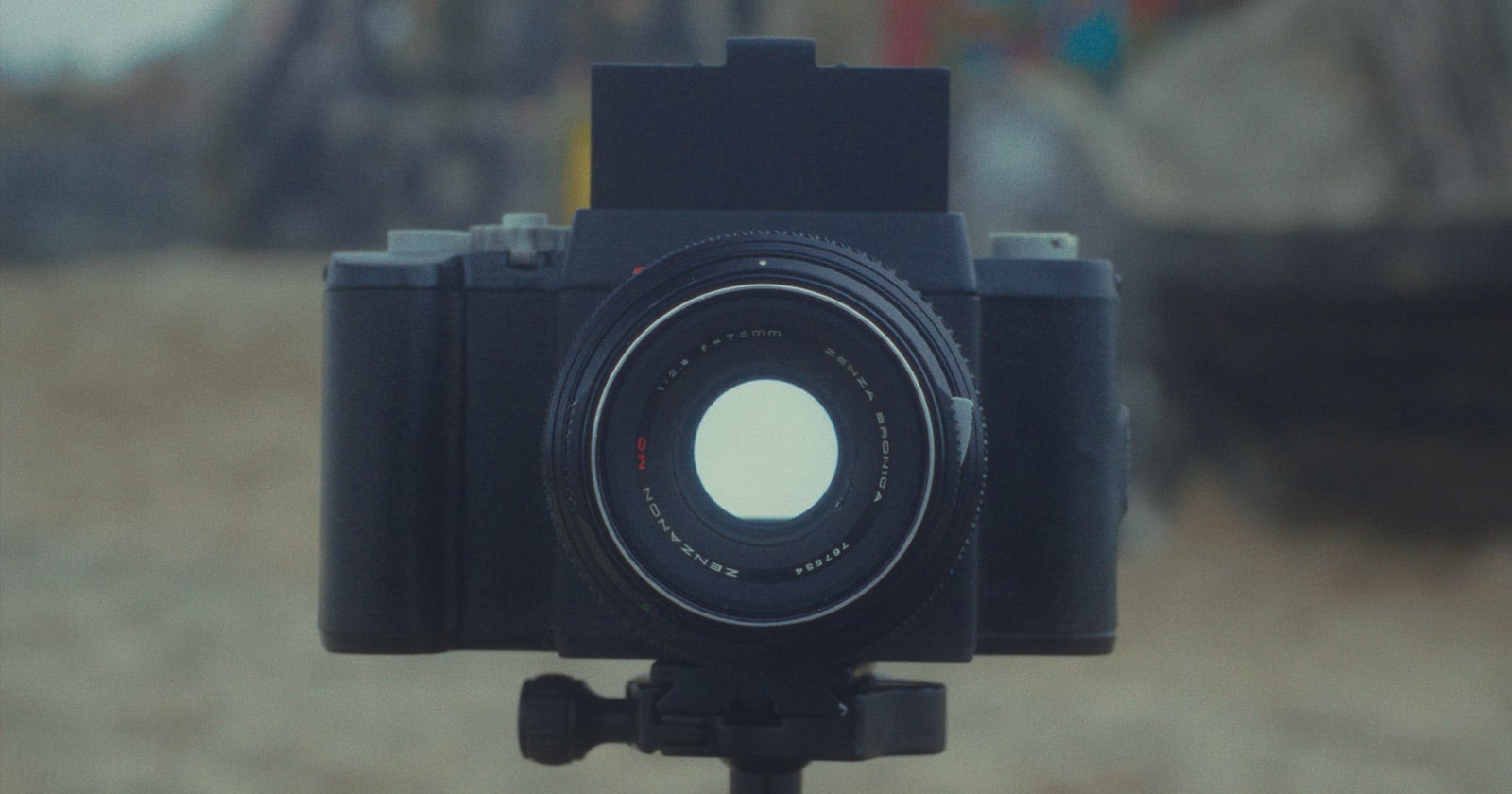
Photographer and tinkerer Robin Beerman is bringing analog panoramic photography to a wider audience with the BeerPAN, a fully mechanical 35mm panoramic SLR designed to be accessible, repairable, and eventually open-sourced.
The BeerPAN is a 35mm film camera that captures panoramic 65x24mm frames, expanding the typical 36x24mm format into a wide, cinematic view. Its waist-level viewfinder encourages photographers to compose by looking down into the frame, creating a slower, more deliberate shooting experience.
“I wanted to combine two things that always fascinated me: a panoramic format made more accessible, with a waist-level viewing experience,” Beerman says.
Built with a fully mechanical film advance and shutter system, the BeerPAN uses Bronica ETR(S) lenses and metal gears to provide a tactile, hands-on feel that Beerman describes as central to the analog photography experience. A bubble level embedded in the viewfinder helps keep horizons straight, emphasizing careful composition.
The camera combines 3D-printed nylon and metal construction, with a main body consisting of a nylon frame sandwiched between two aluminum plates. Two versions will be offered: a base model with nylon plates and a premium version with anodized aluminum plates.
The Bronica ETR(S) lens mount supports a wide variety of lenses, including the Bronica Zenzanon 75mm F2.8 and 40mm F4, with shutter speeds ranging from bulb to 1/500th of a second.
Designed for photographers who are drawn to panoramic photography but discouraged by the high cost of cameras like the Hasselblad Xpan, the BeerPAN also appeals to those who enjoy a mechanical system that can be maintained, repaired, and encourages a thoughtful, intentional style of shooting.
“I think like many analog photographers, once I found out about the existence of the Hasselblad Xpan I was very intrigued by the idea, but because of the cost… I simply couldn’t afford one at the time as a student,” Beerman says.
“Over the years I did use a variety of different analog cameras, and ultimately fell in love with the experience of waist-level viewfinders in cameras like the Mamiya M645 and Hasselblad 500 C/M, but the idea of a panoramic camera was still in the back of my mind. Then I came across DIY projects such as the Oxygen by Oscar (a.k.a Panomicron) and discovered that there’s a big group of people out there that are working on amazing DIY cameras, which inspired me to start working on my own camera.”
Beerman wanted to combine two elements that fascinated him: the panoramic format of the Xpan with the waist-level viewfinder of medium format cameras. “That camera didn’t exist, so I started making it,” he says.
Beerman emphasizes the tactile experience of mechanical photography as a core part of the BeerPAN.
“Initially the camera was going to be fully electronic like the Xpan… Around the same time I decided to take my 500 C/M on a trip… another big part of what made me enjoy using analog cameras was the tactile feeling of mechanical cameras,” he explains.
“There’s something about interacting with a very mechanical device that feels very satisfying… So I decided to completely rework the design to be as mechanical as possible.”
The camera’s mechanical film advance and shutter systems posed engineering challenges, particularly in adapting 35mm film to the wider 65x24mm format.
“Using 35mm film for a 65x24mm panoramic format wasn’t actually that difficult, because the frame is exactly the same height as it would be for a normal 35mm camera. The only thing that changes is how far the film needs to be moved when it’s being advanced to the next frame, which is a relatively easy matter of looking at existing (non-panoramic) designs but changing the gear ratios,” Beerman says.
Beerman selected the Bronica ETR(S) lens mount for reliability and affordability.
“When I started the project I started looking at leaf shutter lenses as creating my own focal plane shutter would be incredibly complex… In the end I settled on the Bronica ETR lenses and with the help of Oscar from Panomicron I figured out how to control the shutter in the lens electronically,” he says.
“The Bronica ETR lenses also aligned fantastically with my goals for the project as there’s a wide variety of focal lengths and they have great optics, but most importantly they’re relatively affordable.”
Beerman plans to release the BeerPAN’s design files under an Open Community License a year after fulfilling Kickstarter orders, allowing others to build, modify, and improve the camera.
“A year after I’ve fulfilled all Kickstarter orders, I want to release the CAD files of the camera to allow others to manufacture the camera themselves and improve the design,” he says.
“Finally, I want this project to have an open flow of information that’s prevalent in the DIY camera community. For example, I’ve released my findings on how the Bronica ETR lenses work so others can learn from it.”
He hopes the camera will inspire photographers drawn to panoramic film but discouraged by its cost, or those seeking a slower, more intentional way of shooting.
“A photographer that has always inspired me is Jason De Freitas… his analog astrophotography and experimental style is mind blowing to me and I’d love to see what he can come up with with a BeerPAN. Another dream come true would be to see the Widelux master himself Jeff Bridges with a BeerPAN.”
The BeerPAN prototype is fully functional and has been tested extensively. Moving to production will involve sourcing machined parts, optimizing 3D printing for consistency, and establishing assembly and quality control procedures, which Kickstarter funding will enable.
Two versions of the camera will be offered: a base model with 3D-printed nylon plates and a premium model with anodized aluminum.
Beerman expects the timeline to run from February 2026 through December 2026, with production completed and cameras shipped to backers by the end of the year.
Image credits: BeerPAN
Disclosure: Make sure you do your own research into any crowdfunding project you’re considering backing. While we aim to only share legitimate and trustworthy campaigns, there’s always a real chance that you can lose your money when backing any crowdfunded project. PetaPixel does not participate in any crowdfunding affiliate programs.
To hold projects accountable, all crowdfunding campaigns on which PetaPixel reports are financially backed with the lowest tier option in order to give the publication visibility into all backer-only communications. If a campaign owner acts in a manner inconsistent with its promises, PetaPixel will share that information publicly.