3 Photographers Capture Ballet's Artistry in 3 Unique Ways
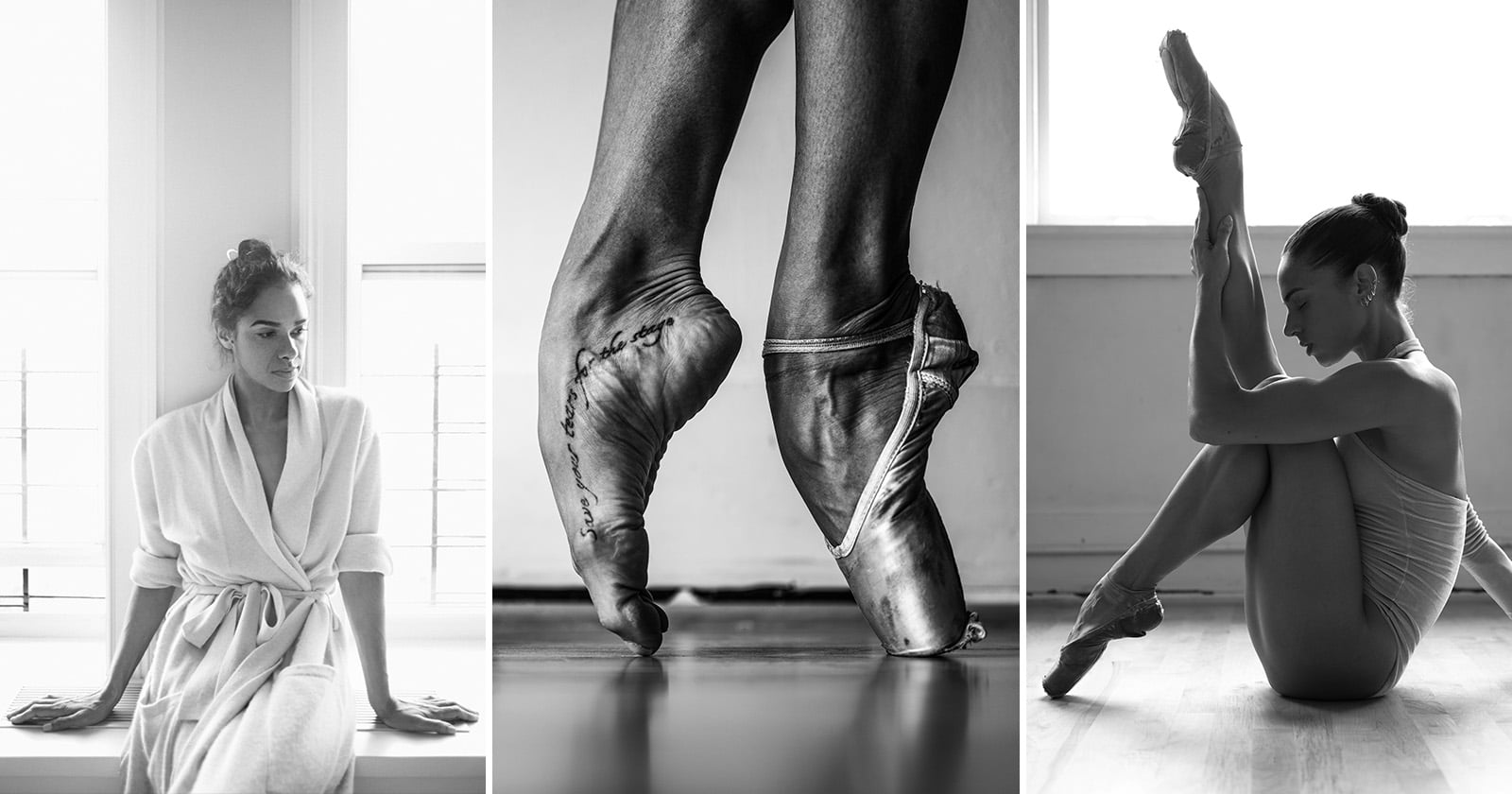
Leica Gallery New York’s upcoming exhibition Ballet pulls back the curtain on one of the most demanding art forms, revealing the discipline, vulnerability, and devotion behind life in movement. The show features never-before-seen photographs of Misty Copeland from her final performance and offers an intimate look at a historic moment in contemporary ballet. Through the work of Henry Leutwyler, Diana Markosian, and Kylie Shea, Ballet captures what remains when the performance ends.
This February, Leica Gallery New York presents Ballet, a group exhibition that turns the camera inward on one of the most exacting and mythologized art forms. Featuring work by Henry Leutwyler, Diana Markosian, and Kylie Shea, the exhibition brings together three distinct photographic practices united by a shared devotion to movement, discipline, and lived experience. Opening February 19 and on view through March 29, 2026, Ballet examines dance not as spectacle, but as a lifelong negotiation between body, identity, and time.
“Leica’s legacy as both an instrument and a philosophy has long empowered photographers to capture the most resonant expressions of lived experience. Beyond photography as a medium, Leica’s practice has become a platform for artists to examine cultural legacy, creative discipline, and human truth,” Leica says.
At the emotional center of the exhibition are never-before-seen photographs by Henry Leutwyler of Misty Copeland from her final performance with American Ballet Theatre on October 22, 2025. Long recognized as one of the most influential figures in contemporary ballet, Copeland reshaped both the visual culture and institutional history of the art form. As the first Black woman promoted to principal dancer at ABT, she became a global symbol of possibility within a tradition that has historically resisted change. Her final bow marked not only the close of a singular career but the end of a transformative chapter in American ballet.
That moment of transition anchors Ballet, serving as both culmination and departure point for the exhibition’s broader exploration of what it means to devote a life to movement.
Henry Leutwyler’s photographs form the exhibition’s quiet emotional foundation. For more than four decades, Leutwyler has documented the world of dance from within, working backstage, in rehearsal, and during moments of private reckoning rather than under stage lights. His relationship with Copeland spans decades and is rooted in trust rather than performance. In Misty Copeland’s Final Bow, Leutwyler strips away spectacle to focus on the physical and emotional toll of a historic career. The resulting images capture Copeland in moments of reckoning and release, offering a rare portrait of closure, vulnerability, and artistic completion.
Where Leutwyler’s work centers on legacy, Diana Markosian’s series Fantômes turns toward impermanence. Inspired by Victor Hugo’s Fantômes and photographed within the Cuban National Ballet’s production of Giselle, her images resist the frozen instant traditionally associated with dance photography. Movement blurs and bodies dissolve as dancers hover between presence and disappearance. A former ballet dancer herself, Markosian brings an embodied sensitivity to the work, reflecting on classical tradition as something both enduring and fragile. Set against Cuba’s shifting cultural landscape, Fantômes becomes a meditation on memory, national identity, and the persistence of beauty in uncertain conditions.
Kylie Shea approaches ballet from the inside out. A professional dancer and photographer, Shea presents a black-and-white self-portrait series that functions as a visual diary of transition. Created with Leica cameras, including the M Monochrom, SL3, and Q3 43, the work traces her movement beyond the classical stage into new creative terrain. By occupying the dual role of subject and documentarian, Shea reveals the physical and emotional architecture behind a life in motion. Grace and strain coexist in these images, underscoring ballet not as an idealized form, but as a lived, evolving identity.
Threaded throughout the exhibition is the lasting impact of Misty Copeland’s career. Rising to international prominence with American Ballet Theatre, Copeland expanded who could be seen, imagined, and celebrated within ballet. Beyond her achievements onstage, she became a visible advocate for access, representation, and equity in the arts, reshaping ballet’s cultural reach and audience.
Her final performance in October 2025 carries particular resonance within Ballet. Captured at the threshold between endurance and release, these images offer a rare perspective on what it means to step away from a life shaped by relentless discipline, physical sacrifice, and public expectation. Rather than monumentalizing the moment, the photographs allow space for reflection, humanity, and transformation.
Across all three bodies of work, Leica functions as both instrument and philosophy, supporting work that unfolds backstage, in rehearsal, and within the self, rather than under theatrical polish.
“The show explores the discipline, vulnerability, and lived experience of ballet through three distinct photographic voices,” Leica says.
Through its galleries and exhibitions, Leica has consistently positioned photography as a means of examining cultural legacy and human experience. Ballet reflects that commitment, using photography not only to document dance, but to honor the process, presence, and lived realities behind artistic excellence, with the exhibition underscoring Leica’s ongoing support of artists who seek deeper truths within their craft.
Ballet opens at Leica Gallery, 406 West 13th Street, New York, NY 10014, with an artist reception on Thursday, February 19, from 6 to 8 pm, followed by a gallery talk on Saturday, February 21, featuring Henry Leutwyler, Diana Markosian, Kylie Shea, and Misty Copeland’s in conversation. Together, the programming reinforces what Ballet ultimately reveals: that behind the precision and poetry of dance lies a world shaped by resilience, devotion, and change.
Image credits: Leica, Henry Leutwyler, Diana Markosian, Kylie Shea, Misty Copeland