Is It Still Possible to Earn a Living from Photography?
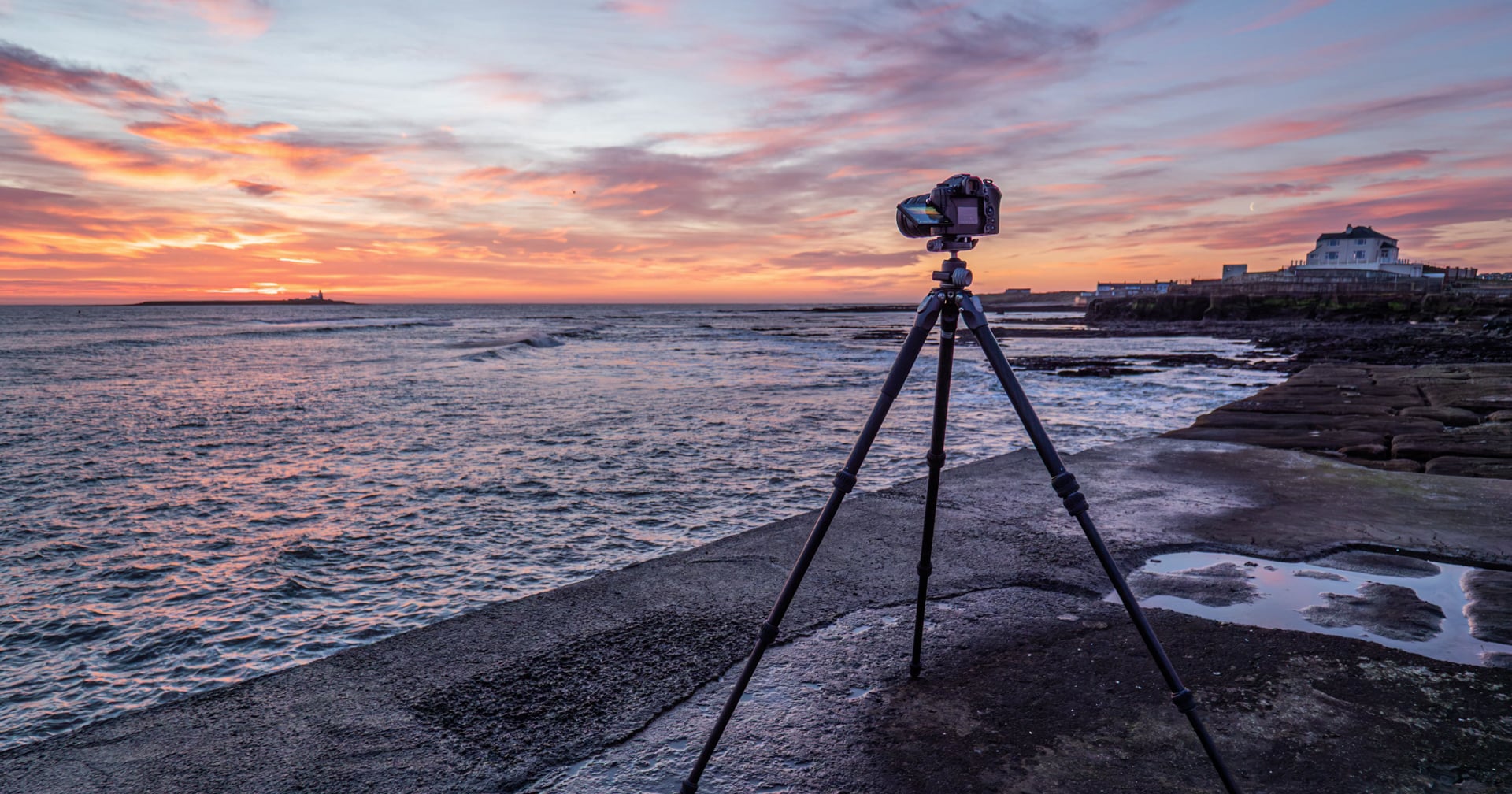
For professional photographers, there’s more to it than just composing a photo and exposing it correctly. It’s great fun, but any photographer can set up a business and benefit from it.
The short answer to the questions in the title is, yes. I do, and several of my clients have gone on to become successful professional photographers. The U.S. Bureau of Labor Statistics estimates that there are approximately 49,500 professional photographers in the United States. You could make it 49,501. Not everyone is cut out for it, but it suits some people perfectly.
There are a wide range of options. What follows is a very brief, incomplete summary of some of those. There are three main routes into professional photography.
Firstly, you can go job hunting. There are often openings to become a full-time employee for someone else in the trade. Although not necessarily well paid, it’s an option that offers stability via a steady income, and it can be a gateway into the industry. But it usually means fewer creative opportunities or less control over your work.
Nevertheless, you will have statutory employee protections. That may include a minimum wage and minimum holidays and these vary depending on where you live. I am in the UK, where the current rate for over-21s is £12.71/hour (approximately $16.14/hour). There’s also a statutory entitlement to 28 days of paid annual leave if you work five days a week, although many companies offer more than that.
Secondly, you could set up your own limited liability company (LLC). Depending on where you live, doing so can be straightforward or very convoluted. If you have money to invest in equipment and maybe real estate, and your market research shows demand, this might be a good option for running your own shop, studio, or similar business.
You can usually do this alone or work in partnership with others.
There are likely to be tax advantages as well. Although your business’s equipment may be at risk if it fails, your personal belongings, such as your family home, should be safe if things go awry. But always check your local rules.
Thirdly, the most popular option is self-employment. Again, you can do this alone or in a partnership with others.
That is what I do: I run courses and workshops, lead photoshoots, and accept commissions. I also write articles like this one you are reading and do a few other things unrelated to photography. It allows me total flexibility. For example, I used to shoot weddings but found them repetitive and less enjoyable than other aspects of my work, so I gave them up and passed the work on to others.
The most significant risk is being unable to work; can you survive financially if you are unwell for a month? It’s also important to remember that if you take a vacation, then you are not being paid.
As with anything in life, it is worth having insurance to cover the losses from those unexpected events.
You should check with your insurer to make sure your gear is covered. One mistake many amateur photographers make is to start selling photos and assume their home insurance still covers their camera gear. As soon as you try to sell a photo or offer a service, an amateur insurance cover may become invalid.
Many insurance companies will try to find ways not to have to pay. Insurers in the USA deny between 10% and 20% of health claims, and some deny much more. Meanwhile, a recent survey found that 40% to 51% of homeowner claims were closed without payment in 2024.
Insurance is usually split into different areas, and you need to consider what cover you need. The above incidents are examples where public liability insurance was necessary. Another area where people fail to make adequate provision is equipment cover; I once dropped and broke a $1000 lens, and the insurance covered it. Then, if you use your car for business or to transport clients, you may need to extend that policy as well.
Here in the UK, we have free healthcare through our National Health Service. Although we can get treated for free, it doesn’t cover loss of earnings should we fall ill. However, elsewhere, health insurance is a must.
Furthermore, if you advise people, you may also want to consider professional liability insurance.
About 20 years ago, a professional photographer took a step backward on the street and accidentally knocked someone over, who fell, hit their head, and sustained brain damage. The photographer was insured, but their coverage fell far short of how much the family of the injured and permanently disabled man claimed.
Over 30 years ago, my then-employer called me to investigate why the power had gone out at one of the sites. The man at the house opposite was unwell, so a neighbor cut his lawn as a favor. He moved a sailing dinghy on a trailer to gain access, and the mast hit overhead power lines. Luckily, nobody was hurt. However, the surge caused damage. The equivalent of $2 million worth of cables, transformers, and power equipment in the building I attended was destroyed. The homeowner’s insurance would not cover it because the friendly neighbor was excluded from the policy as a contractor. The neighbor also had no third-party liability insurance for the work. Luckily for them, the power company and the business I worked for waived the costs.
When you start up a business, you will handle all the tasks that other companies spread across a team. You will need to do all your administration, record and bookkeeping; marketing and advertising will be important too. You will need to manage your website and social media, oversee health and safety, change printer cartridges, empty the bins, sweep the floor, and make the coffee.
If you employ an assistant, you are the HR manager, too. These jobs will use up a lot of your time and do not create revenue. Nevertheless, they are essential, so you need organizational skills to prioritize your work.
The best advice I was given to use my time effectively was to make lists. Write down everything you need to do and prioritize it.
When prioritizing, if you feel overwhelmed or low on energy, start with quick, manageable tasks that require little effort. It helps clear mental clutter, breaks procrastination, and gives a quick sense of accomplishment. However, you can also start with the significant impact tasks, scheduling the urgent and vital jobs early in the day when your energy is at its highest.
Have you noticed how easy it is to get absorbed in tumbling through never-ending doomscroll drivel on your phone, and then discover that half your day has disappeared? If you want to be successful in your business, avoiding intellect-decaying slop and focusing on the task at hand are essential. Those addictive, time-wasting interferences eat into the hours you could spend on your business. If you struggle to ignore them, switch off your phone’s news feed and remove the apps that distract you.
I used to enjoy social media as it kept me in touch with friends and relatives around the world. Back then, Instagram was just as good for seeing other people’s photos as for sharing mine. Now, its feeds, along with those of most other social media networks, are filled with never-ending toxic brain pollution.
Consequently, I no longer have Facebook, Instagram, LinkedIn, or X on my phone. If I want to post to them to promote my business, I can do so from my computer. Occasionally, I check in to see what my closest friends are up to, but I set a time limit and stay on task. But I don’t want to be trapped by the worthless, AI-generated nonsense popping up on my phone and eating my life away.
If you are starting a business, then getting professional advice is essential. You may find that there are restrictions or incentives that you are unaware of. A good place to start is with your local government. It may run fully funded business workshops. You may also see that professional advice is available from your accountants.
There will also be information from central and local government on essential matters such as Health and Safety, tax, and data protection, to name just a few.
Even now, ten years into my business, I seek advice. I have built up a network of pro photographers, and we can call on each other for advice and practical help. I am a big believer in getting back what you give. So, be generous with your knowledge and, if you need assistance, ask others what they think.
Every single day, I relish what I do. Whether it is being out on a cold, windswept beach, poring over photos in my library, sitting in a bird hide with a client, or reading a biography of an accomplished photographer from the past, all aspects of photography bring me joy. It has done so for over fifty years. (Removing social media has allowed me more time to do that.) Loving photography benefits your creativity and, consequently, your motivation.
There are areas I am not so keen about, accounting being one of them. So I add that spoonful of sugar to help the medicine go down by sending a friendly or helpful message with my invoices.
To progress in any venture, building enjoyment into one’s work is essential. Nevertheless, it is not the approach taken by every photographer. Read some of the cantankerous comments online, and you will realise that not everyone who has a camera is enthralled by photography; instead, they are miserable. I sometimes wonder why they even pick up their cameras. Moreover, I do wonder why anyone would bother engage them.
Set realistic daily, monthly, and annual targets. These aren’t necessarily financial. In fact, treating income as a nice reward for your work, rather than a target, always works best to maximise your profits. You probably notice if a business is driven by a desire to deliver outstanding service or solely to make money, no matter what damage they do. Your clients will see through your motivations, too.
Then, at the end of each period, review how well you have done to achieve those targets.
I won’t pretend that starting any business isn’t an uphill climb. It takes dedication, hard work, and perseverance. Nevertheless, being a busy, full-time professional photographer is brilliant. The benefits are not just financial. You will make new friends, learn a lot, and feel satisfaction in a job well done.
The opinions expressed in this article are solely those of the author.