Canon Partners With Vaonis to Make $99,000 Observatory-Grade Telescope
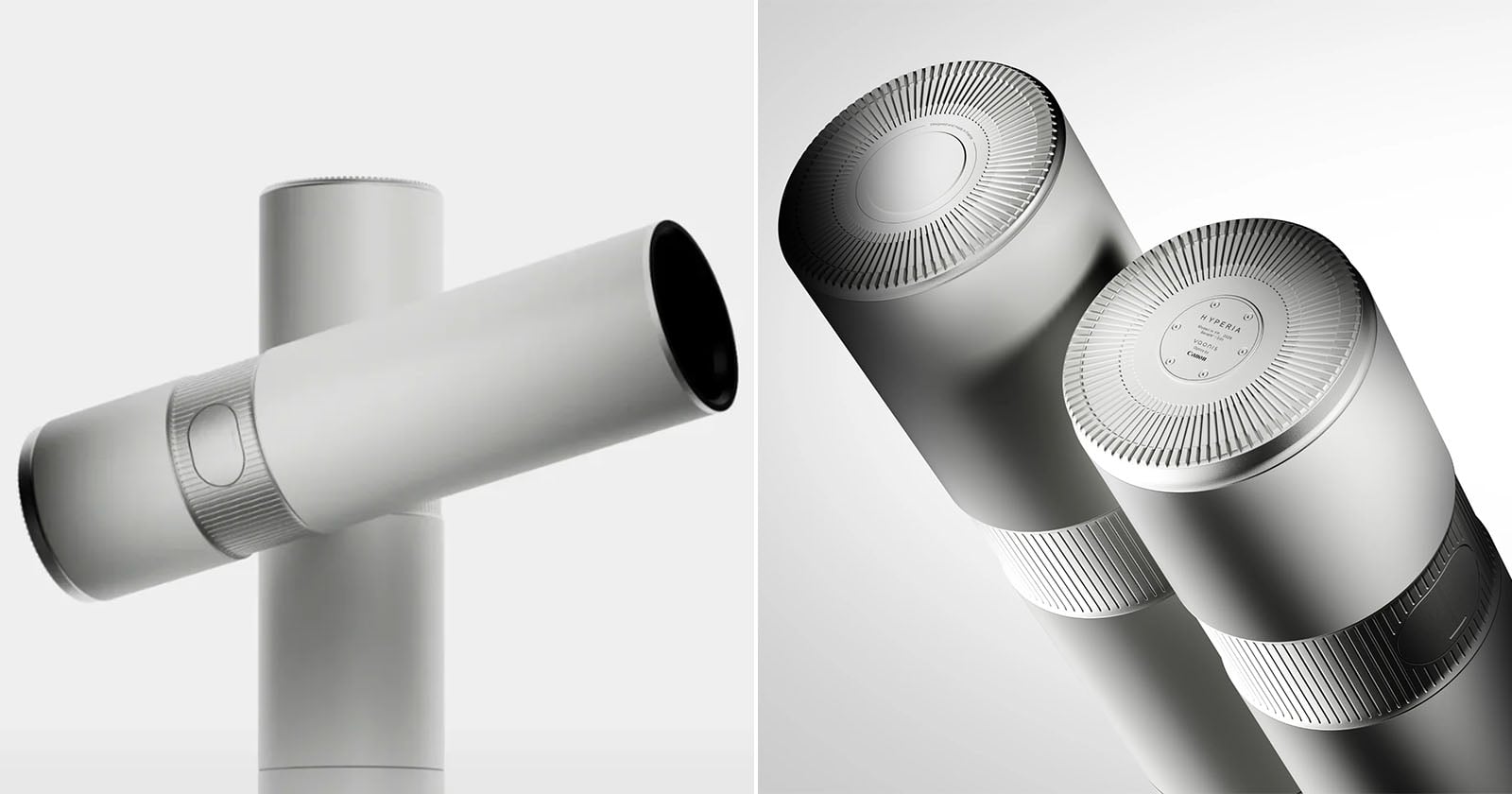
French smart telescope company Vaonis has unveiled Hyperia, a professional observatory it developed alongside Canon.
Vaonis has always been known for its premium smart telescopes, but they have all hovered in price around $1,700 to $3,000. The new Vaonis Hyperia, on the other hand, is $99,000, putting it far outside the reach of most but not all stargazing enthusiasts and more in the realm of professional and educational astronomy institutions and organizations.
However, despite the significantly different price point, the Hyperia stays true to Vaonis’ well-established core mission: Making the wonder of the cosmos more accessible. Obviously, “accessible” is relative, and a nearly-six-figure telescope is not financially accessible to many hobbyists, but it still aims to make the cosmos accessible in other meaningful ways.
“With Hyperia, we asked ourselves a new question: what happens when you remove every limit?” Vaonis says, before describing Hyperia as “not just another telescope.” The company believes its newest telescope will empower collective enjoyment of space in a fresh, exciting way.
Naturally, once “every limit” is removed, a company like Vaonis can implement significantly more sophisticated (and expensive) technology in its telescopes. Hyperia was initially conceived to solve a scientific project requirement at the Palais de la Découverte in Paris, equipping the famous science museum with a new state-of-the-art digital astronomical observatory. After completing this task, Vaonis realized it had something special on its hands and that the Hyperia should be available to others as well.
Like other Vaonis telescopes, the Hyperia promises to be straightforward to set up, easy to use, and deliver assistance to its users. Although the Hyperia is much more capable than other Vaonis telescopes, it is no more difficult to use.
Hyperia also doubles down on the educational experience aspect of other Vaonis telescopes, which has thus far been limited to individual users or a small group actively at the telescope. The Hyperia can stream real-time observations to planetariums, classrooms, and even theaters, letting audiences witness space as the telescope sees it. Vaonis promises that Hyperia makes the cosmos a “reliable medium for learning.”
Perhaps the most interesting aspect of the Vaonis Hyperia for photography enthusiasts is Vaonis’ new relationship with Canon. Much like competing smart telescope brand Unistellar works with Nikon, Canon is getting in on the cosmic fun.
Hyperia’s 150mm aperture f/4 lens includes “optical technologies derived from decades of Canon expertise.” Each of the telescope’s 17 lens elements features Canon’s acclaimed Air Sphere Coating (ASC) anti-reflective technology, which minimizes internal reflections to deliver superior resolution and contrast.
“Developed by Canon, each element is positioned to correct distortion, chromatic aberration, and field curvature before the image is formed,” Vaonis explains. “Sharpness is uniform, from center to edge.”
Thanks to Canon’s optics, “what reaches the [Hyperia’s] sensor is purer, cleaner, and more faithful to the night sky,” Vaonis says.
Speaking of the Hyperia’s sensor, it’s a familiar one. Although Vaonis has not yet said precisely which image sensor it is, the Hyperia’s 45-megapixel full-frame back-illuminated sensor seems an awful lot like the chip in the Canon EOS R5 II camera at first glance. PetaPixel will follow up on this and other Canon technology in the Hyperia telescope in a subsequent deep dive feature.
As is expected, the Hyperia works alongside Vaonis’ app. This mobile app, available on smartphones and tablets, enables users to research and select celestial targets, begin observations, schedule future observations, set up multi-night observations, and fine-tune image processing.
The Hyperia, driven by its full-frame image sensor and Canon optics, promises exceptional image quality, which users can take full advantage of through manual processing if they want to go beyond the telescope’s automated image processing options.
The Vaonis Hyperia is truly in a class of its own. It is an observation-grade smart observatory with cutting-edge Canon optics and imaging technology and user-friendly operation. Unsurprisingly, the Hyperia is a pricey proposition. Preorders will begin this month for $99,000, and Vaonis says deliveries will commence in 2027.
The Hyperia costs a pretty penny, and Vaonis acknowledges that the most likely customers for the Hyperia are museums, educational institutions, and observatory operations seeking better outreach opportunities. However, Vaonis also targets space-obsessed, well-heeled consumers as a target audience for its cutting-edge telescope. If six-figure sports cars exist for car lovers, why can’t a $99,000 smart telescope exist for amateur astronomers?
Image credits: Vaonis